Published
- 7 min read
Navua River Canoe, Magic Waterfall and Village Day Tour with Lovo Lunch
The Navua River doesn’t look remarkable from Queens Road. You cross a bridge south of Pacific Harbour and keep going. But head upriver by motorised longboat and the landscape transforms: the valley narrows, the gorge walls rise, and within 20 minutes you’re moving through the kind of tropical river canyon that doesn’t exist in the brochure version of Fiji — deep green, overhung with rainforest, waterfalls dropping from the rock walls, and the sound of water competing with the engine.
This day tour — commonly called the Jewel of Fiji and a multiple award-winner — uses that river as the route to something genuinely special: a swim at Fiji’s largest waterfall, a bamboo raft ride using the same technique Fijians used for centuries before roads, and a full village welcome at Koromakawa Village with kava ceremony, cultural performances, and a lovo lunch cooked underground while you were on the river.
From Nadi or Denarau, allow for a 2.5–3 hour drive to the Pacific Harbour/Navua departure point. This is a full day — leave early and plan to be tired in the best way.
At a glance
- Duration: ~5.5 hours on the river and at the village (total day including transfers from Nadi: 10–12 hours)
- Departure point: Pacific Harbour / Navua area
- Travel from Nadi/Denarau: approximately 2.5–3 hours each way
- Includes: hotel pickup, professional guide, lovo lunch, all activities listed
- What it requires: reef shoes or secure water footwear, clothes you can get wet
The drive east: understanding where you’re going
The first thing to know is that the Navua River is not near Nadi. The Pacific Harbour area is roughly two-thirds of the way to Suva, past Sigatoka, past Coral Coast resorts, on the wetter eastern side of the island. The drive itself passes through genuine cross-island Fiji — the landscape shifts from dry cane fields to wet, greener, more forested country as you go. Your guide provides commentary en route: villages, farms, the history of sugar growing in Fiji, the social geography of Viti Levu’s two coasts. It’s not dead time if your guide is engaged.
A 15-minute coffee and restroom stop is built in along the way.
The river journey: longboat up the Upper Navua gorge
From the jetty near Pacific Harbour, you board a motorised longboat — low-sided, covered, seating four to six people — and head upriver. The 45-minute journey covers the most dramatic stretch of the Navua: gorge walls rising 20–30 metres, cascading tributary waterfalls visible from the water, wild river ducks and herons on the banks, and the green-black water of a river that has been carving this canyon for thousands of years.
The guide identifies the geology, the birds, and the villages you pass — some accessible only by river. This is not countryside you can drive to.
The Magic Waterfall
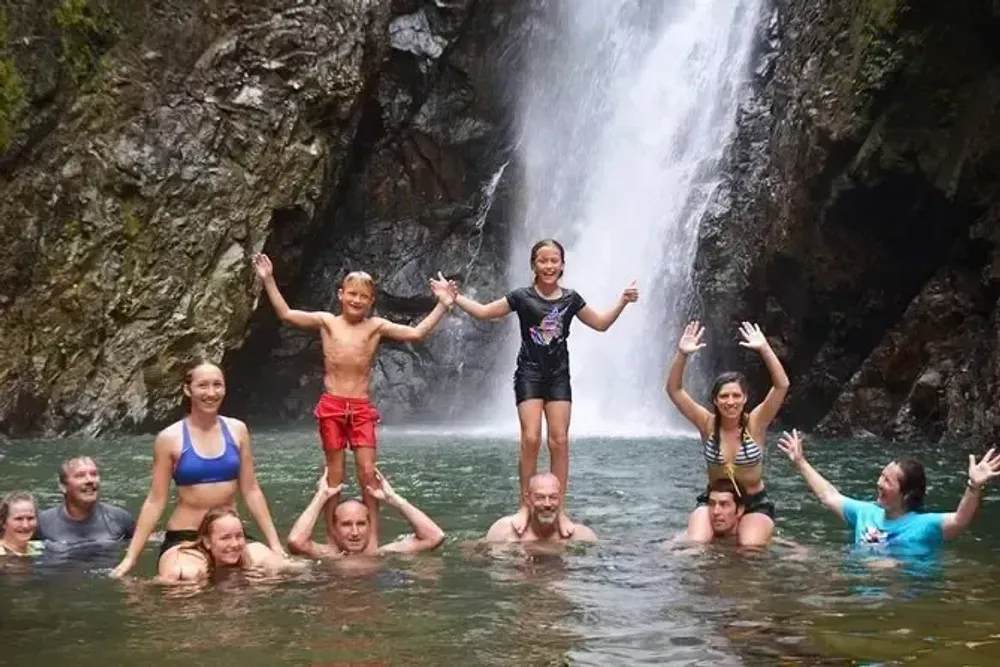
At the appointed point, the boat docks and a five-minute walk leads to Fiji’s biggest accessible waterfall on this river system — a multi-stage cascade into a wide pool that can accommodate up to 100 swimmers. The water is cold, clear, and fast-moving at the base of the main drop. Allow 30 minutes here; most guests use all of it.
Reef shoes are strongly recommended for the walk and the waterfall pool — the rocks are smooth and slippery even when they look safe. An old pair of trainers with grip also works. Thongs and bare feet are a bad combination with wet river rock.
Bamboo raft back to the village
Rather than returning downriver by motorboat, the return leg uses a bilibili — a flat bamboo raft, poled and paddled, requiring no motor and making almost no sound. The craft is genuinely ancient: this is how Fijian river villages moved goods and people before roads existed, and the HMS Bilibili (as it’s affectionately called on this tour) runs the same smooth water back toward the village in 30 minutes of near-silence.
It’s cooler and slower than the boat leg, which means you’re moving through the same landscape at a different pace and noticing different things.
Koromakawa Village: kava, culture, and lovo lunch
The welcome: a Fijian warrior escort meets you at the village landing and walks you to the community hall. The welcome kava ceremony — the sevusevu — is performed in full traditional form, “only for visiting high chiefs or very important people” as the village introduction puts it. The coconut shell, the three claps, the drink. First-timers usually find the taste milder than expected and the ceremony itself more moving than they anticipated.
Village life: cultural performances by the village men and women (war dance, song and dance), demonstrations of tapa painting (bark cloth printing), mat and basket weaving, and a walk through the village with a guide explaining the community’s history — including the story of John Humphrey Danford, the lone Englishman who established this village in the early 1800s and whose influence on its layout and traditions is still visible.
The lovo lunch: while you were on the river, the lovo pit was prepared underground — meat, fish, and root crops wrapped in banana leaves, buried with hot coals. The unearthing happens when you arrive, the steam rises, and the food comes out: buffet service with garden salads, root crops, local fruit, and whatever came out of the ground. Multiple travellers describe this as the best meal they had in all of Fiji.
Fijian farewell: before departure, a traditional farewell song from the village. Then the boat back downstream.
What’s included
- Hotel pickup and drop-off (Nadi, Denarau, and Coral Coast areas)
- Professional guide throughout
- Motorised longboat trip up the Navua River
- 30-minute swim at the Magic Waterfall
- 30-minute bamboo raft (bilibili) ride
- Village welcome, kava ceremony, cultural demonstrations
- Lovo lunch (cooked underground, buffet service)
What’s not included
- Souvenir photographs if offered by village or tour operators
- Gratuities for guides and village hosts
What to bring
Reef shoes or secure closed-toe footwear that can get wet — this is non-negotiable for the waterfall. Swimwear under clothes you’re happy to get wet. A dry bag for your phone and wallet. Sunscreen and insect repellent. Small FJD cash for any purchases in the village. A towel.
Dress code for the village: covered shoulders and knees are required in the community hall and during the ceremony. A t-shirt (not a singlet/tank) and a sulu, towel, or lightweight trousers over shorts is the right approach. No one will ask you to leave if you’re underprepared, but coming prepared is the right thing.
FAQs
How long is the drive from Nadi?
Approximately 2.5–3 hours each way. This is the honest reality of the tour and the reason some guests are surprised by the total day length. It’s worth it — but it’s a full day, not a half-day.
Is the waterfall walk difficult?
From the boat dock it’s a five-minute walk on uneven ground. The pool area has slippery rocks. It’s not a strenuous climb, but sure footing matters. Reef shoes are the difference between a relaxed swim and an anxious one.
Is this suitable for families?
Consistently well-reviewed by families. The boat ride engages children immediately, the waterfall is instinctively fun for any age, and the village activities hold attention well. Reef shoes for all children are important.
What does the kava taste like?
Earthy, mildly bitter, with a light numbing effect on the lips and tongue. At ceremonial quantities it’s not intoxicating — it’s a social lubricant with a long tradition in Pacific cultures. Most first-timers are relieved to find it less unpleasant than rumoured.
Operated by Discover Fiji Tours (The Jewel of Fiji). Multiple international tourism award winner. Departs from Pacific Harbour / Navua area.
Ready to book this tour?
Purchase On ViatorBy: Sarika Nand