Published
- 22 min read
Top 10 Tourist Attractions in Fiji
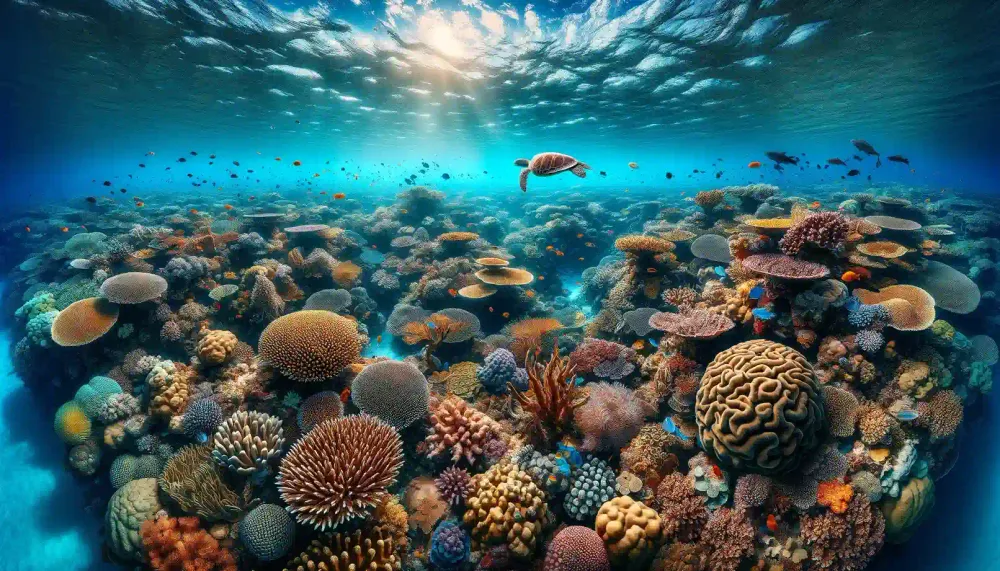
Ask most people what they know about Fiji and you’ll get the same short list: white sand, turquoise water, overwater bures. That’s not wrong, exactly — the beaches are as good as advertised, and the resort experience Fiji has built around them is genuinely world-class. But it’s a partial picture, and for travellers who limit themselves to the resort pool and the occasional snorkelling trip, an enormous amount of the country goes unseen.
Fiji is an archipelago of more than 330 islands, and the largest, Viti Levu, contains more cultural and natural diversity than most visitors suspect. Within a couple of hours of Nadi Airport you can stand inside the most spectacular Hindu temple in the Southern Hemisphere, soak in volcanic mud pools, walk through a rainforest towards a swimming hole, and visit a village where the architecture has changed very little in 150 years. Further out — on the Coral Coast, in the Ba Highlands, across the water to Taveuni, or down to Pacific Harbour — the attractions get progressively more dramatic and less visited.
The honest caveat is that geography matters. You won’t see all ten of these from a single Denarau resort base. Some require a domestic flight or a commitment to driving Viti Levu’s Queens Road. A few are genuinely off the resort circuit. But that’s part of what makes them worth visiting — and it’s precisely the kind of engagement with Fiji that produces the travel stories people are still telling years later.
Top 10 tourist attractions in Fiji:
- Sri Siva Subramaniya Dravidian Temple, Nadi
- Sigatoka Sand Dunes National Park
- Sabeto Hot Springs and Mud Pools
- Garden of the Sleeping Giant
- Fiji Museum, Suva
- Colo-I-Suva Forest Park
- Navala Village, Ba Highlands
- Pacific Harbour and Beqa Lagoon Shark Diving
- Bouma National Heritage Park, Taveuni
- Naihehe Cave, Sigatoka Valley
1. Sri Siva Subramaniya Dravidian Temple, Nadi
The gopuram of the Sri Siva Subramaniya Swami Temple rises nearly 30 metres above the southern end of Nadi town in a riot of hand-painted colour: celestial figures, mythological scenes, gods and demons rendered in vivid reds, blues, yellows, and greens, stacked tier upon tier against the tropical sky. It is, by common agreement, the largest Hindu temple in the Southern Hemisphere, and it is one of those rare places that makes you stop walking and simply stare.
What makes it particularly remarkable is that it’s not a heritage attraction preserved in aspic — it’s a fully functioning place of worship, the spiritual centre of Fiji’s large Indo-Fijian community, most of whom are descendants of indentured labourers brought from southern India to work the sugarcane fields in the late 19th century. The Dravidian style of the architecture traces directly back to the temples of Tamil Nadu; the artisans who painted the gopuram were brought from India specifically for the work.
Visiting requires the usual courtesies of any active religious site: shoulders and knees covered, shoes removed at the entrance (lockers are available), modest behaviour inside. Photography is permitted in the outer areas and grounds, but not inside the sanctum; ask before you point a lens anywhere. Entry is free, though donations are appreciated. The temple is a short walk from the centre of Nadi town — easily reached on foot from the main market area. Arrive early in the morning, before 10am if possible, to catch the morning puja when the smell of incense and the sound of bells creates an atmosphere that is genuinely unlike anything else in the Pacific. Allow at least an hour.
2. Sigatoka Sand Dunes National Park
About an hour’s drive south of Nadi along Queens Road, where the Sigatoka River meets the sea on the Coral Coast, a stretch of enormous coastal sand dunes rises above the beach in formations that look more like the Western Australian coast than the tropics. This is Fiji’s first national park, and it protects one of the most ecologically and archaeologically significant landscapes in the country.
The dunes were formed over thousands of years by the sediment carried down by the Sigatoka River — the longest river in Fiji — and deposited by coastal wind and wave action. They’re still active, which means they migrate and shift over time. What makes them genuinely extraordinary is what they contain: archaeologists have recovered pottery fragments and human remains here dating back more than 3,000 years, giving the site some of the oldest evidence of human settlement in Fiji. The National Museum has artefacts from these excavations, but the site itself carries a quiet historical weight if you know what you’re standing on.
The walking track from the small visitor centre takes between one and two hours depending on how far you go. The views from the dune crests — ocean on one side, the Sigatoka Valley and its patchwork of fields on the other — are excellent. Entry is F$10 per person. The park is right on Queens Road and easily accessible by rental car or as a stop on a Coral Coast tour. Go in the morning before the heat builds, wear proper shoes (the sand is soft and the climbing is steeper than it looks), and bring water. The beach at the base of the dunes is wild and beautiful, though the surf can be strong — check conditions before swimming.
3. Sabeto Hot Springs and Mud Pools
The Sabeto Valley, a broad inland basin flanked by a jagged mountain ridge about twenty minutes north of Nadi, is volcanic country. The evidence is warm, mineral-rich water bubbling up from the ground, and the mud pools and hot springs that have formed around the geothermal activity are among the most visited natural attractions in Fiji — for good reason.
The experience at the Tifajek site is straightforward and unambiguously enjoyable: you lower yourself into a pool of warm volcanic mud, let the grey-brown stuff coat you from the neck down, sit in the sun while it dries to a mineral crust on your skin, and then wash it all off in the adjacent hot spring pools. It sounds absurd. It is, slightly. Most people come away grinning and declaring their skin has never felt smoother, which may be a placebo effect but is a pleasant one either way. The setting — the Sabeto mountains directly behind, sugarcane paddocks stretching to the coast — makes the whole thing feel less like a day spa and more like a genuine landscape encounter.
Tifajek charges per person for entry, with access to both the mud pools and the spring pools included; prices are generally in the FJ$40–60 range per adult, making this one of the more accessible budget activities in the Nadi area. It’s popular with families as well as couples, and the staff on-site are helpful and used to first-timers. Many Nadi tour operators combine this with the Garden of the Sleeping Giant in a half-day package, which is genuinely logical — the two attractions are close together and complement each other well. If you’re going independently, take Queens Road north towards Lautoka, turn inland at the Sabeto Valley junction, and follow the signs. Bring a change of clothes and a bag for your muddy swimmers.
4. Garden of the Sleeping Giant
The backstory here is one of the stranger and more charming footnotes in Pacific tourism history. Raymond Burr — the American actor best known for playing Perry Mason and Ironside on television — acquired a property in the Sabeto Valley in the 1970s and began cultivating tropical orchids. Not as a business venture; as a personal passion. By the time of his death in 1993, he had assembled a collection of some 2,000 species. The garden was subsequently maintained and opened to the public, and it now sprawls across around 20 hectares of terraced hillside at the foot of the mountain range whose profile, viewed from the valley floor, resembles a sleeping figure — hence the name.
It’s a genuinely lovely place. The orchid displays are the headline, but the garden has broadened well beyond its original focus: there are lily ponds, shaded rainforest walks, open lawns, and a series of well-maintained paths that allow you to wander at your own pace without following a fixed route. The morning light in the orchid houses is particularly beautiful. Everything is immaculately kept, which matters — some tropical gardens can feel neglected and overgrown, but the Sleeping Giant has clearly had consistent investment over the years.
Entry is approximately FJ$25 per adult. The garden opens at 9am and closes in the early afternoon (check current hours before visiting). It’s about 30 kilometres north of Nadi town and most easily reached by private car, rental car, or as part of a half-day tour from Nadi or Denarau. The Sleeping Giant and Sabeto Mud Pools combination is one of the most practical half-days you can spend in the Nadi region — different in character but perfectly matched in geography, with both attractions in the same valley. Go to the garden first while it’s cool, then finish with the mud pools.
5. Fiji Museum, Suva
Suva is underrated. Most travellers don’t make it to the capital at all, which is an understandable consequence of Fiji’s geography — the resorts cluster around Nadi and Denarau, and Suva is a three-hour drive away on the other side of Viti Levu. That’s a genuine logistical barrier. But Suva is a real Pacific city — complex, lively, politically significant — and the Fiji Museum in Thurston Gardens is one of the best regional museums in the entire Pacific.
The collection is extraordinary for its depth and honesty. There are canoes — including sections of a drua, the traditional double-hulled Fijian sailing vessel that was capable of crossing vast stretches of open ocean — displayed at full scale in a purpose-built hall. There are colonial-era artefacts that tell the story of Fiji’s history as a British colony with a degree of nuance you don’t always find in post-colonial museum collections. There is Bligh’s log from the Mutiny on the Bounty — William Bligh navigated a lifeboat from Tonga to Timor after being cast adrift, passing through Fijian waters and recording the encounter in extraordinary detail, and the original document is here. There are exhibits on the indentured labour system that brought Indian workers to Fiji, and on the complex relationship between Fijian and Indo-Fijian culture that continues to shape the country.
Entry is F$7 per adult, making it one of the best-value cultural experiences in Fiji. It’s in the heart of Suva, easily reached from the central city. Allow at least two to three hours; the museum is more substantial than its modest exterior suggests. If you’re making the drive from Nadi — and it’s worth doing at least once — combine the museum with a walk through Suva’s excellent produce markets and waterfront.
6. Colo-I-Suva Forest Park
About eleven kilometres north of central Suva, past the suburbs and up into the green hills that rise above the city, the Colo-I-Suva Forest Park protects a remnant patch of Fijian tropical rainforest that feels like a different planet compared to the flat coastal resort zone. This is Fiji as it looked before European contact: dense, layered, humid, filled with the calls of birds that exist nowhere else on earth.
The park is threaded with walking tracks at several levels of difficulty, ranging from flat riverside paths to steeper ridge walks with views across the forest canopy. The main draw for most visitors is the series of natural swimming holes and small waterfalls along the Waisila Creek — cool, clear freshwater pools where you can swim in the forest shade. The water runs brown-tinged with tannins, which is natural and harmless, and the combination of cool water and warm forest air is one of the more refreshing experiences in the Suva area.
The birdlife is excellent: the Golden Dove, several species of parrot, honeyeaters, and the Fiji Woodswallow are all regularly sighted here. Birdwatchers should go early in the morning. Entry to the park is very inexpensive — around FJ$5–10 per person — and the park is accessible by taxi from Suva in about 20 minutes. It’s a genuinely easy half-day excursion from the city, and one of the few places near Suva where you get a tangible sense of the natural environment before the forest was cleared for agriculture. Wear shoes with grip, as the tracks can be muddy after rain, and bring insect repellent.
7. Navala Village, Ba Highlands
If you drive inland from the town of Ba on the northern coast of Viti Levu, the road climbs steeply into the highlands through a landscape of volcanic hills, river valleys, and sugarcane farms that gives way to something older and quieter. About an hour’s drive from Ba, Navala sits in a wide valley of the Ba River — and it is one of the most visually arresting settlements in Fiji, a village of around 200 traditional bures arranged in careful rows on the hillside above a river bend.
What makes Navala genuinely unusual is that the bures are the real thing. In most Fijian villages, traditional architecture has been replaced over the decades by corrugated iron and timber-frame construction. Navala has maintained its thatched bures through a combination of community commitment and, increasingly, a recognition that the village’s architectural integrity is itself a form of cultural heritage. Standing on the ridge above the village and looking down at the rows of thatched roofs against the green hills is one of those views that doesn’t look like it should exist in the 21st century.
Visits to Navala need to be arranged properly. This is a living community, not a heritage park, and the appropriate approach is to arrive with a guide who has established a relationship with the village, or to go through a tour operator who works with the community and can arrange a sevusevu — the traditional kava ceremony that formally introduces visitors and requests permission to enter. Some operators run day trips from Nadi that include Navala; these are worth the cost because the local context and introductions they provide make the experience vastly more meaningful than simply turning up. Dress respectfully (sulu and covered shoulders for the village visit), and bring a gift of yaqona root.
8. Pacific Harbour and Beqa Lagoon Shark Diving
Pacific Harbour, on the Coral Coast about 45 minutes west of Suva, has positioned itself as Fiji’s adventure capital — white-water rafting, zip-lining, cultural shows — and the marketing isn’t wrong. But the single most extraordinary experience in the area has nothing to do with the land. The Beqa Lagoon, just offshore, is home to one of the world’s most famous shark diving sites: a deliberately fed aggregation that on any given dive day might include eight species of shark, including bull sharks and tiger sharks in numbers that are genuinely staggering.
Beqa Adventure Divers is the primary operator and runs a tight, professional operation. The dive itself takes place at around 30 metres, where a team of experienced divemasters manage a controlled feed while certified divers kneel in a semi-circle and watch 30, 40, sometimes 70-plus sharks circulate in the water column above. It sounds terrifying to people who haven’t done it, and looks utterly serene to people who have — the sharks are not behaving aggressively, and the experience of being in the water with these animals at that proximity is profoundly affecting in a way that watching wildlife from a safe distance never quite matches.
For non-divers, snorkel-based shark encounter experiences also exist, though these are shallower and involve a different set of sharks (typically reef sharks rather than the deep-water bull and tiger encounters). A full shark dive with Beqa Adventure Divers costs around FJ$380–430 per person including equipment. Advance booking is essential; the dive runs on scheduled days and spaces fill up. Pacific Harbour is accessible by car from both Suva and Nadi; allow a full day.
9. Bouma National Heritage Park, Taveuni
Taveuni is where Fiji starts to feel genuinely wild. The third-largest island in the archipelago, it sits about 40 kilometres east of Vanua Levu and is accessible by domestic flight from Nadi (roughly one hour) or by a combination of ferry and road transport that takes considerably longer. It is known, with good reason, as the Garden Island — the interior is dense rainforest draped over volcanic peaks, and more of Taveuni is protected forest than developed land. The birdlife, the marine environment, and the botany are all extraordinary.
The centrepiece of the island’s natural attractions is the Bouma National Heritage Park, which protects the northeastern portion of the island and contains the Tavoro Waterfalls — three separate tiers of falls, each reachable on foot, each with a natural swimming pool at its base. The first waterfall is an easy 10-minute walk from the park entrance and can be visited by anyone, including children and less mobile visitors. The second requires a moderate 45-minute climb. The third, at about 90 minutes of walking each way, rewards the effort with a higher, more dramatic falls and far fewer people. All three are genuinely swimmable, fed by clear mountain water.
The park also protects the beginning of the Lavena Coastal Walk, a four-hour return trail that follows Taveuni’s wild northeastern coast through traditional villages, past deserted beaches, and eventually to another waterfall that drops directly into the sea. It’s one of the best day walks in Fiji, and almost nobody does it compared to the crowds at the first Tavoro falls. Entry to Bouma is around FJ$15 per adult. Bouma is on the eastern coast of Taveuni, about 20 kilometres from Matei (where the airport is), reachable by local bus or hired transport.
10. Naihehe Cave, Sigatoka Valley
The Sigatoka Valley cuts deep into the interior of Viti Levu, flanked by steep hills thick with forest, the river running brown and broad through the valley floor. About an hour’s drive inland from the Coral Coast town of Sigatoka, past sugarcane farms and scattered villages, a limestone cliff face rises above the valley and the entrance to Naihehe Cave gapes in the rock.
Naihehe is the last cannibal fortress cave in Fiji, and no, that’s not a tourism board fabrication — it’s historical fact. The Navatusila clan, a fearsome warrior people who were among the last in Fiji to resist conversion to Christianity and the cessation of traditional practices, used this cave system as a defensive stronghold through much of the 19th century. The interior chambers are spacious enough to have housed the entire clan during siege conditions; the natural cisterns collected rainwater; the single narrow entrance was easily defended. The clan was known for cannibalism, which was part of both practical warfare and ritual practice in pre-colonial Fiji, and the cave’s history as a site of last resort is layered with genuine historical weight.
Guided tours run by local operators take you through the cave interior with torches, narrating the history of the Navatusila and their resistance. The tour typically includes a kava ceremony at the cave with a representative of the clan, which remains one of the most compelling cultural encounters you can have in Fiji — sitting in the mouth of a cave that your hosts’ ancestors defended with their lives, drinking grog with descendants of the people who lived here. Tours run from Sigatoka town and the Coral Coast, usually taking a half-day including the drive. Prices are approximately FJ$80–120 per person depending on the operator and what’s included. A rental car and some capacity for unsealed road are required for independent visits.
Final Thoughts
The ten attractions on this list span the full length of Viti Levu and reach as far as Taveuni, 200 kilometres to the northeast. That’s the honest geography of Fiji’s best sights — they’re not clustered conveniently around the resort zone, and seeing more than three or four of them properly requires a genuine commitment to moving around the country rather than sitting in one place.
That’s a feature, not a flaw. Fiji rewards travel. The contrast between the Sri Siva Subramaniya Temple and Naihehe Cave, or between the manicured paths of the Sleeping Giant and the wild volcanic coast of Taveuni, is part of what makes the country genuinely interesting as a travel destination rather than simply a beautiful backdrop for photographs. The cultural complexity — indigenous Fijian tradition, the Indo-Fijian inheritance, the colonial history that shaped both — is visible and accessible if you bother to look. Most visitors don’t bother, which means those who do often find themselves with an experience that feels like a genuine discovery.
A practical suggestion: if you have two weeks in Fiji, don’t spend all of them at a single resort. Spend three or four nights in the Nadi area and cover the Sabeto Valley, the temple, and the Sigatoka Dunes. Take the domestic flight to Taveuni for three or four nights. Drive or take a guided trip to Suva for the museum and Colo-I-Suva. Find a way to Pacific Harbour if shark diving is even slightly appealing to you. The resorts will be there when you need them — but so will everything on this list, and it won’t all wait forever.
Frequently Asked Questions
Do you need a car to visit these attractions?
For the Nadi-area attractions — the temple, Sabeto Mud Pools, and Garden of the Sleeping Giant — you can manage with taxis or organised tours, and tour packages combining multiple sites are widely available from Nadi and Denarau. For the Coral Coast attractions (Sigatoka Dunes, Naihehe Cave), a rental car or organised tour is much more practical. Suva attractions are reachable by bus or tour from either end of Queens Road. Taveuni requires a domestic flight and local transport on the island.
What is the best time of year to visit Fiji?
May to October is the dry season — lower humidity, cooler temperatures averaging 26–28°C, and the best conditions for outdoor activities including diving, hiking, and coastal walks. November to April is hotter and wetter, with cyclone risk from January through March. That said, wet season storms typically arrive in heavy bursts rather than sustained days of rain, and most activities continue. Dive visibility at Beqa Lagoon and around Taveuni can actually be better in the wet season due to reduced coastal runoff from tourist areas.
Is the Beqa Lagoon shark dive suitable for nervous divers?
Yes, with some caveats. Beqa Adventure Divers runs a professional and highly structured operation, and the vast majority of divers who do the dive describe it as one of the most profound wildlife experiences of their lives rather than a frightening one. The divemasters are skilled at managing both the sharks and the human participants. That said, you need to be a certified diver with some open-water experience — this is not an introductory dive. Nervous divers who go with realistic expectations and a willingness to follow briefing instructions typically do very well.
Can you visit Navala Village without a guide?
Technically yes, but practically it’s the wrong approach. Navala is a living community and the appropriate way to enter any Fijian village is to present a sevusevu — a ceremonial offering of yaqona root — to the village headman, who then formally welcomes you. Without a guide or operator who has an established relationship with the village, this process can be awkward for both visitors and villagers. A small number of tour operators run Navala day trips from Nadi that include the sevusevu, a guided tour, and context that makes the visit far more meaningful.
How long does it take to drive from Nadi to Suva?
Between three and four hours along Queens Road, depending on traffic and stops. Queens Road is a sealed highway running around the southern coast of Viti Levu, passing through the Coral Coast towns of Sigatoka and Pacific Harbour before reaching Suva. The Kings Road, which runs around the northern coast, is longer and has sections of unsealed road. Most visitors and local transport use Queens Road. It’s a genuinely scenic drive in parts, especially through the Coral Coast section, and worth stopping along the way rather than treating it purely as a transit run.
Is it worth spending time in Suva?
Yes, particularly if you have any interest in Pacific history, politics, or culture. Suva is the largest city in the Pacific outside Australia and New Zealand, and it has a genuine urban character — excellent restaurants, lively markets, a functioning arts scene — that the resort zone around Nadi entirely lacks. The Fiji Museum alone justifies the trip for anyone with a serious interest in the history of the region. Allow at least two full days if you want to do Suva justice.
Are the Taveuni waterfalls accessible for non-hikers?
The first tier of the Tavoro Waterfalls in Bouma National Heritage Park is easily accessible — it’s a ten to fifteen minute walk on a well-maintained track from the park entrance and is suitable for all ages and fitness levels. The second and third tiers require progressively more effort and should be treated as moderate hikes. The Lavena Coastal Walk is longer (about four hours return) but not technically difficult; it does require a reasonable level of general fitness and good shoes. None of these walks require specialist equipment or experience.
What currency is used in Fiji, and can you use cards at these attractions?
The Fijian dollar (FJD) is the local currency. Most resorts and tourist operators in the Nadi and Coral Coast area accept credit cards, but smaller sites — including the Fiji Museum, Colo-I-Suva Forest Park, and some of the village-based experiences — operate on cash. It’s sensible to carry a mix of cash and card, and to draw FJD from ATMs in Nadi, Sigatoka, or Suva rather than relying on currency exchange at the airport, where rates are typically worse.
By: Sarika Nand