Published
- 24 min read
Manta Ray Spotting in Fiji: Where and When to See Them
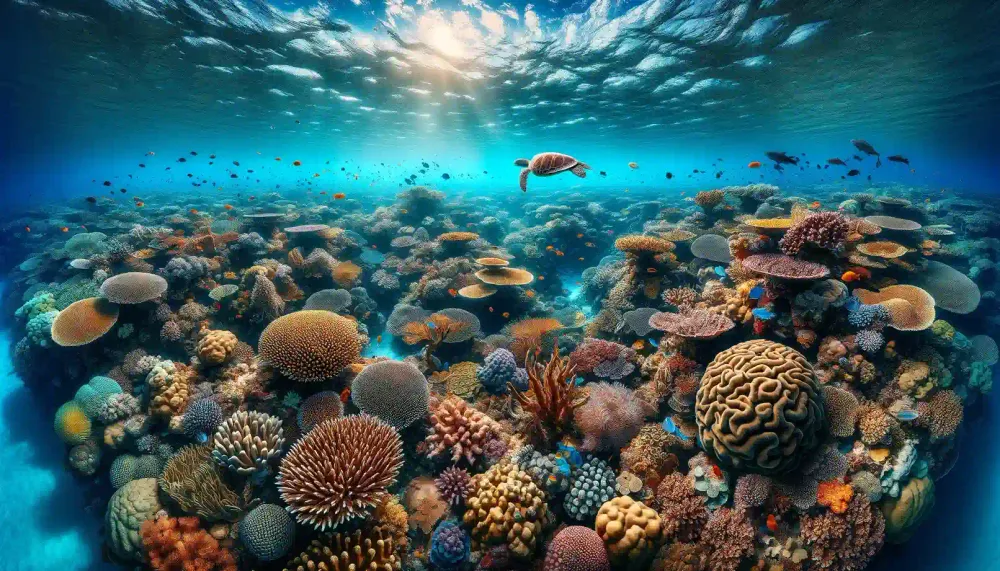
There are encounters in the ocean that recalibrate your sense of scale. A manta ray — wings outstretched, banking slowly through clear water with the unhurried authority of something that has no predators worth worrying about — is one of them. At full span, a large reef manta measures four metres or more from wingtip to wingtip. It moves with a kind of effortless geometry, the cephalic fins at the front of its head furled or unfurled depending on whether it is feeding, its long tail trailing behind it like a signature. Nothing about the encounter is threatening. Everything about it is extraordinary.
Fiji sits at the heart of one of the Pacific’s most reliable manta ray circuits. The country’s warm, plankton-rich waters provide exactly the conditions that reef manta rays need to feed and aggregate, and several sites across the archipelago have established themselves as genuinely consistent manta destinations — particularly during the dry season months. The most celebrated of these is Drawaqa Passage, a narrow channel between Naviti Island and Nanuya Lailai Island in the central Yasawa Islands, where reef manta rays gather in numbers that can make it feel, on the right day, like the ocean has organised itself specifically for your benefit.
Unlike shark diving — which requires scuba certification and a certain willingness to sit with apex predators at depth — manta encounters in Fiji are accessible to almost anyone in the water. Reef mantas are filter feeders. They eat plankton, tiny crustaceans, and small fish strained through their gill plates; they have no teeth of consequence and no interest in the large mammals flailing around above them with masks and fins. You do not need to be a diver to see them. At Drawaqa, snorkellers regularly encounter mantas feeding at the surface during incoming tides, and the experience of floating at the water’s surface while a four-metre animal glides directly beneath you is, if anything, more immediate than a diving encounter. This guide covers where to find mantas in Fiji, when to go, how to behave in the water, and what to expect.
Species in Fiji: Reef Manta vs Oceanic Manta
There are two species of manta ray in the world’s oceans, and Fiji has the possibility of both — though in practice, most encounters here involve one species far more reliably than the other.
The reef manta ray (Mobula alfredi, formerly classified as Manta alfredi) is the species you are almost certainly going to encounter at Fiji’s known manta sites. Reef mantas are the smaller of the two species — “smaller” being relative, since adults can reach a wingspan of 4.5 metres and a weight of 1,400 kilograms — and they live relatively coastal lives, returning repeatedly to specific cleaning stations and feeding grounds. This site fidelity is precisely what makes encounters at places like Drawaqa Passage predictable. Individual reef mantas have been identified and catalogued at specific sites in Fiji; researchers can tell one animal from another by the unique pattern of spots and markings on their white ventral surface. Some of the mantas photographed at Drawaqa have been returning to the same passage for well over a decade.
The oceanic manta ray (Mobula birostris, formerly Manta birostris) is the larger species — adults can reach a wingspan of seven metres, making them the largest rays in the ocean — and they are genuinely pelagic animals, spending most of their lives in open water far from reefs and coastlines. Oceanic mantas are less predictable anywhere in the world, including Fiji. Sightings do occur, particularly in the passages between the outer islands and in open-water sections of the archipelago, but they cannot be planned for in the way that reef manta encounters at known aggregation sites can. If you encounter an oceanic manta in Fijian waters, you will likely know it immediately: the sheer scale of a seven-metre animal in the water is unmistakable even without a tape measure, and oceanic mantas often carry a characteristic dark back with no white markings on the shoulder, as well as a distinctive black-tipped colouration on the cephalic fins.
Both species were reclassified from the genus Manta into the genus Mobula in 2017, when genetic and morphological research established that they belong within the broader group of devil rays rather than as a separate lineage. The name change is reflected in current scientific literature, though you will still encounter the older Manta designation widely in travel writing and operator materials. Both species are listed as Vulnerable on the IUCN Red List — more on that below.
Drawaqa Passage, Yasawa Islands
If there is one place in Fiji that justifies a dedicated manta trip, it is Drawaqa Passage. The site sits in the central Yasawa Islands, between the southern end of Naviti Island and the northern tip of Nanuya Lailai Island — a gap in the reef through which ocean currents push nutrient-rich water on a tidal schedule that reef mantas have apparently been tracking for generations. The passage is perhaps 200 metres wide, and on a good day in the dry season, the number of manta rays moving through it can be remarkable: five, ten, sometimes twenty or more animals in the water simultaneously, some feeding at the surface, others circling at cleaning stations below.
The reason mantas aggregate here involves two complementary forces. During incoming tides, the current pushes through the passage and concentrates plankton against the reef structure, creating a feeding lane that mantas exploit by swimming circuits through the plankton-dense water with their cephalic fins spread wide, scooping food continuously. This is surface feeding, visible from a snorkelling position, and it is the encounter that many visitors describe as the most affecting — the sheer number of animals, their proximity, and the almost meditative quality of watching large creatures feed methodically in clear water just beneath you.
The second draw is the cleaning station. At depth within and around the passage, specific coral structures host resident populations of cleaner wrasse — small fish that pick parasites and dead skin from larger marine animals. Manta rays visit these stations regularly and, crucially, they hover while they are being cleaned. For divers, this creates a genuinely extraordinary opportunity: a manta that is being cleaned is essentially stationary, often for several minutes at a time, sometimes in a queue of multiple animals waiting their turn, hovering in the current with their wings gently sculling to maintain position. A diver kneeling on the reef while a four-metre manta hovers two metres overhead, completely absorbed in its cleaning process, is not a moment that fades quickly from memory.
The best months at Drawaqa are generally May through October — Fiji’s dry season, when water temperatures drop to around 24 to 26 degrees Celsius and plankton density increases in the cooler, more nutrient-rich water. Peak season is typically June through August, when aggregations tend to be largest and most reliable. This aligns conveniently with the school holiday period in Australia and New Zealand, meaning that Drawaqa is not exactly a secret during those months; the channel can have multiple boats anchored and groups of snorkellers in the water simultaneously. This does not necessarily diminish the encounter — the mantas appear unbothered by the human presence — but it is worth timing your water entry thoughtfully and respecting the general etiquette of not crowding other groups.
Accessing Drawaqa Passage requires either staying on Naviti or Nanuya Lailai and arranging a local boat, or travelling up from the southern Yasawas with one of the island-hopping operators. Barefoot Kuata, based further south in the Yasawas, offers guided manta snorkelling and diving trips that include Drawaqa; several resorts on Naviti itself organise daily manta trips when conditions are suitable. When booking accommodation in the central Yasawas, it is worth asking directly whether the property offers guided manta trips and whether the local guide knows the passage’s tidal rhythm — good timing relative to the tide makes an enormous difference to encounter quality.
Other Manta Sites in Fiji
Drawaqa commands most of the attention in any discussion of Fijian manta diving, and that focus is largely justified. But it is not the only place in the country where manta encounters are possible, and travellers whose itineraries take them elsewhere need not consider themselves manta-deprived.
Kadavu Island, in Fiji’s Southern Division, has documented seasonal manta aggregations particularly around the southern sections of the Great Astrolabe Reef — the world’s fourth-largest barrier reef. Kadavu is considerably less visited than the Yasawas or the Mamanucas, partly because it requires a light aircraft or a ferry from Suva to reach, and partly because it has not developed the tourism infrastructure of the more accessible islands. The diving here is, by most accounts, outstanding — pristine reef, excellent visibility, and a fraction of the diver traffic of the Yasawas — and the manta encounters, when they occur, happen in conditions of relative privacy. The seasonality is roughly similar to Drawaqa, though with less accumulated observational data and accordingly less predictability. For divers who value a genuinely remote experience and are comfortable with more uncertainty about specific animal encounters, Kadavu rewards the effort significantly.
Namena Marine Reserve, off the coast of Vanua Levu near Savusavu, is one of Fiji’s premier dive destinations and has produced manta encounters, though they are not as reliable or aggregation-focused as Drawaqa. The reserve is renowned for its pelagic life — hammerhead sharks, eagle rays, and significant schools of barracuda and fusiliers — and a manta sighting here arrives in the context of a broader offshore wildlife experience rather than a dedicated manta encounter. Savusavu-based dive operators who work the Namena Reserve regularly will have current information about whether mantas have been showing up.
Taveuni and the Somosomo Strait — home to the famous Rainbow Reef and Great White Wall — see occasional manta sightings, particularly at certain current-exposed outer reef sites. This is incidental rather than planned manta diving, but the area is worth mentioning because the diving there is exceptional by any standard and because mantas are genuinely part of its wildlife.
Around the Mamanuca Islands, closer to Nadi, manta encounters are occasional and generally less predictable than at Drawaqa, though some outer reef sites in the right season can produce sightings. The Mamanucas’ proximity to the main island makes them an accessible option for day trips, but if manta spotting is your primary objective, the journey to the Yasawas is the more reliable investment of your travel time.
Snorkelling vs Diving with Mantas
One of the genuinely appealing things about manta encounters at Drawaqa is that you do not need scuba certification to have them. This separates manta spotting from most of Fiji’s other marquee marine wildlife experiences, where depth is a prerequisite. At Drawaqa, particularly during feeding tide windows, mantas regularly come within a metre of the surface — sometimes breaking it entirely as they execute feeding turns. A snorkeller floating face-down in calm water, breathing steadily and staying horizontal, can be directly above or alongside a feeding manta for minutes at a time.
Snorkelling tips for manta encounters:
The cardinal rule is stillness. A manta that is feeding in a current-driven passage has a specific circuit it is following; it is not deviating significantly for distractions. Snorkellers who kick aggressively, dive down towards the animals, or crowd the water column disrupt this circuit and typically cause the manta to move away or to descend. The approach that consistently produces the best encounters is passive: fin gently to position yourself in the current’s drift, then stop and let the animals come to you. They often will.
Do not dive down towards mantas from the surface. This is both counterproductive and contrary to responsible encounter guidelines. Manta rays respond to approaching objects from above by diving — exactly the opposite of what you want. Stay at the surface, stay horizontal, and allow the animal to choose its own trajectory.
Equipment needs are minimal: a well-fitting mask that does not leak, comfortable fins, and a snorkel. A wetsuit is advisable both for warmth during longer sessions in the water (Yasawa water temperatures in the dry season can feel cool after an extended session) and for sun protection on your back. A rash vest as a minimum if you prefer not to wetsuit; the equatorial sun at the surface will burn exposed skin quickly.
Diving with mantas:
For certified divers, the cleaning station experience adds a dimension that snorkelling cannot access. Cleaning stations at depth in Drawaqa Passage are typically at eight to twenty metres — within comfortable range for Open Water certified divers — and the behaviour of mantas at these stations is fundamentally different from their surface feeding behaviour. A manta being cleaned is unhurried, focused, and almost motionless. The experience of kneeling on the reef watching a succession of mantas — sometimes four or five animals cycling through the same cleaning station — hovering a few metres away while tiny cleaner wrasse work over their gills, is among the quieter and more absorbing things available underwater in Fiji.
The key dive skill for cleaning station observations is buoyancy control. You need to settle at a consistent depth without touching the reef and without ascending or descending in a way that disturbs the mantas’ approach to the cleaning fish. Good buoyancy is a prerequisite for quality manta diving, and if yours is not yet reliable, an additional practice dive before attempting the cleaning station is a sensible investment.
Best Time of Year
Timing is more consequential for manta encounters than for almost any other Fijian marine wildlife experience. The following is an honest summary of what the seasonal patterns generally look like at the main sites.
May to October (Dry Season) is the recommended period for manta encounters at Drawaqa Passage and across most of Fiji’s known manta sites. Water temperatures during these months sit between roughly 24 and 26 degrees Celsius — cooler than the summer months — and the cooler water holds more dissolved oxygen and supports higher plankton density. Plankton is what reef mantas are eating, and where plankton concentrates, mantas tend to follow. Peak season for aggregations at Drawaqa is typically June through August, when the combination of tidal patterns, water clarity, and plankton availability produces the most consistent reports of large numbers of animals. July and August are also the busiest months for Yasawa tourism generally, so expect company in the water at the main sites.
November to April (Wet Season) sees warmer water — 27 to 30 degrees Celsius — and correspondingly lower plankton density. Manta numbers at Drawaqa and other aggregation sites typically decrease during this period, and encounters are less predictable. This does not mean mantas disappear from Fijian waters in the wet season; it means that the specific aggregation patterns at known sites are less reliable. Divers exploring outer reef sites and offshore areas during the warmer months can still encounter mantas, and some sites at Kadavu and in the open channels between island groups produce sightings throughout the year. The wet season also brings occasional whale shark sightings in Fijian waters — a different pelagic encounter worth being alert to.
There is an honest caveat that should accompany any seasonal manta guidance: manta rays are wild animals. They are not reliably present at any site on any specific day, regardless of the season. Current conditions, sea surface temperature fluctuations, unusual plankton distributions, and factors that neither researchers nor local guides fully understand can all affect whether animals appear at a known site on a given day. Operators who promise guaranteed sightings are not being straight with you. The operators worth booking with will explain the odds, describe the conditions that increase your chances, and tell you clearly that the animals are unpredictable. A May through October visit to Drawaqa during a good tidal window gives you a strong chance of an encounter — far better odds than almost anywhere else in the Pacific — but “strong chance” and “certainty” are different things. Set your expectations accordingly, and if the mantas happen to be absent on your day, Fiji’s water is still extraordinary.
Responsible Encounters
Manta rays are not delicate animals in a physical sense — they are large, powerful, and in their element in the ocean. But they are sensitive to the behaviour of people in the water near them, and the wrong approach will end an encounter faster than almost anything else. More importantly, as a species under sustained global pressure, mantas deserve a standard of behaviour from snorkellers and divers that goes beyond the minimum.
The following guidelines reflect both the Manta Trust’s codes of conduct for manta encounters and the practical experience of operators who have worked with these animals for years at Fijian sites.
Do not chase mantas. A manta that is moving away from you is expressing a clear preference. Following it will accelerate its departure and can disrupt feeding or cleaning behaviour that may have been underway for some time. If an animal is moving away, stop and wait; mantas often complete circuits and return to the same area.
Maintain a minimum of three metres distance. This is a standard guideline across responsible manta encounter programmes globally. In practice, mantas will often come closer than this on their own initiative — particularly during feeding, when they are focused on the plankton column and less attentive to nearby snorkellers. When the manta chooses to approach you, hold your position; when you are actively swimming, maintain the three-metre rule.
Do not touch mantas. Touching removes the mucus layer that protects mantas from infection and parasite damage. It also tends to startle the animal and end the encounter. The impulse to reach out towards something so large and so close is understandable; resist it.
No flash photography. Flash is disorienting to mantas and other marine animals, and there is no photographic justification for using it in open water in daylight conditions. Modern underwater cameras and housings produce excellent results in natural light; if your equipment requires flash to produce usable images, consider whether the photograph is worth the disturbance to the animal.
Stay horizontal in the water. Vertical snorkellers and divers — feet pointing downward, body upright — appear more threatening and create more turbulence than horizontal ones. Stay flat, kick smoothly, and minimise splash at the surface.
Choose operators with strong conservation ethics. This is more than a slogan. Operators who enforce the above guidelines in the water, who brief their guests properly before entry, and who actively discourage chasing and touching, produce not just better conservation outcomes but measurably better encounter quality. Groups that are well-briefed and well-behaved spend more time with mantas than groups that are not. Ask operators directly how they brief guests for manta encounters, and pay attention to whether the answer is specific or generic.
Dive Operators and Accessing Manta Sites
Getting to Drawaqa Passage from the Fijian mainland requires either a multi-day Yasawa cruise or a Yasawa Flyer ferry journey to a central Yasawa resort, followed by local boat access to the passage. The Yasawa Flyer (operated by South Sea Cruises) departs from Port Denarau Marina near Nadi and makes stops at islands throughout the Yasawa chain; Naviti is several hours into the journey. Planning for at least two to three nights in the central Yasawas gives you the best chance of timing a manta trip with a favourable tidal window.
Naviti Island resorts — there are several options ranging from budget bures to mid-range properties — typically offer manta snorkelling and diving as a guided activity, with local guides who know the passage and its tidal rhythm well. When booking, ask specifically whether manta trips are offered, what the current season looks like, and how many guests are typically taken per boat. A smaller group in the water produces a better encounter.
Barefoot Kuata, based on Kuata Island in the southern Yasawas, runs guided manta trips to Drawaqa Passage as part of their marine conservation programme. They have a strong record of responsible manta encounter management and operate with a conservation-focused ethos that extends through their broader reef activities. Their trips to Drawaqa are among the more cited positive experiences in traveller accounts of Yasawa manta encounters.
Yasawa Beachcomber and several other Yasawa-based properties organise manta day trips from their island bases. The quality of these trips varies with the local guide’s knowledge of the passage and their willingness to enforce encounter guidelines. Asking a property directly about their guide’s experience at Drawaqa specifically — as opposed to manta diving generally — is a reasonable vetting step.
For all Yasawa manta operators, understand what “manta season” means when they use it. Most operators will describe May through October as manta season, and within that window, June through August as peak. This is broadly accurate. But manta season does not mean mantas are at the passage every day; it means the odds are materially better during those months than at other times of year. A booking made with a clear understanding of that distinction will produce more realistic expectations and a more satisfied traveller.
Beyond Fiji: Conservation Context
Both manta species — reef manta (Mobula alfredi) and oceanic manta (Mobula birostris) — are listed as Vulnerable on the IUCN Red List, and oceanic mantas were uplisted to Endangered in 2019 under updated assessments. The pressures driving these listings are well-documented: targeted fishing for their gill plates (used in traditional Chinese medicine, where they are marketed as a health product despite no scientific evidence of efficacy), bycatch in nets targeting other species, and the animals’ low reproductive rate, which makes population recovery slow. A reef manta typically produces a single pup every two to five years; a population under sustained harvest pressure cannot replace its losses at anything like the rate a bony fish can.
Fiji’s relationship with manta rays is, by regional standards, a relatively positive one. The country’s national shark sanctuary legislation, enacted in 2014, offers a degree of broader marine protection, and targeted manta fishing has not been a significant industry in Fijian waters in the way it has in parts of Southeast Asia. The aggregations at Drawaqa have been studied and monitored by researchers associated with the Manta Trust and related organisations, and the individual identification databases built from those studies are contributing to the broader understanding of manta ray population dynamics in the Pacific.
The economic argument for manta conservation is worth stating, because it is the argument that tends to move policy in places where conservation ethics alone do not. A live manta ray, visited repeatedly by snorkellers and divers over its long lifespan, generates substantially more economic value than a dead one. Estimates from various Pacific manta tourism operations place the lifetime tourism value of a single reef manta in the hundreds of thousands of dollars. The gill plates of that same manta would fetch a fraction of that figure. The arithmetic is not complicated. Tourism operators, resort owners, and local communities whose livelihoods depend on healthy marine environments have a direct financial interest in manta protection — and in Fiji’s case, that alignment of economic interest and conservation outcome is one of the more functional models in Pacific marine tourism.
What this means for the traveller is straightforward: by visiting Drawaqa with a responsible operator and following encounter guidelines, you are part of an economic model that makes protection of these animals financially rational. You are also, more simply, a guest in the presence of something that has been swimming these channels since before any of us arrived. That deserves appropriate conduct.
Final Thoughts
There is a specific quality to time spent in the water with manta rays that is difficult to account for in a travel itinerary. It is not the adrenaline of the Beqa shark dive; it is something quieter and more patient. Mantas are not performing for you. They are feeding, or being cleaned, or simply moving through a passage on a route they have followed many times before your arrival and will follow many times after your departure. The encounter asks you to slow down and pay attention, to be still in the water while something much larger than you does exactly what it intended to do regardless of your presence. That quality of encounter — where you are genuinely incidental to the animal’s activity — is rarer in wildlife tourism than it perhaps should be, and Fiji offers it in conditions that are, on the right day, as good as anywhere in the world.
Come in the dry season, plan for several days in the central Yasawas, find an operator with a guide who knows the passage’s tidal rhythm, and set your expectations honestly. Manta sightings at Drawaqa during the peak months are probable, not guaranteed. If the passage is quiet on your first attempt, try again on the next suitable tide. The Yasawa Islands are not a difficult place to spend additional time. And if the mantas do appear — banking through the current in a group, circling the cleaning station in the blue water below you, occasionally surfacing with a wing raised above the waterline — the days you waited will seem entirely well spent.
Frequently Asked Questions About Manta Ray Spotting in Fiji
Do I need to be a certified diver to see manta rays in Fiji?
No. At Drawaqa Passage in the Yasawa Islands, reef mantas frequently feed at or near the surface during incoming tides, and snorkellers have outstanding encounters without any scuba equipment. A mask, fins, and a snorkel are all you need. For deeper cleaning station encounters, Open Water certification is sufficient — the stations in and around Drawaqa are typically at eight to twenty metres, well within Open Water range. Certified divers will have access to a different dimension of the experience, but non-divers should absolutely not feel excluded from manta encounters in Fiji.
When is the best time to visit Fiji for manta rays?
May through October is the most reliable window, with June through August considered peak season at Drawaqa Passage. During these months, cooler water temperatures support higher plankton density, which drives manta aggregations. Encounters are possible outside this window but are less predictable and typically involve fewer animals. No encounter can ever be guaranteed — mantas are wild animals — but a dry-season visit to the central Yasawas offers the best odds of a significant encounter in Fiji.
How do I get to Drawaqa Passage in the Yasawa Islands?
The most practical approach is to take the Yasawa Flyer ferry from Port Denarau Marina (near Nadi) to one of the central Yasawa resorts on or near Naviti Island, then arrange manta trips through the resort or with a local boat operator. The ferry journey to the central Yasawas takes several hours; plan for a minimum of two to three nights on the islands to allow for tidal timing and weather flexibility. Blue Lagoon Cruises and other multi-day Yasawa cruise operators also visit Drawaqa Passage as part of their itineraries.
What should I do — and not do — when I encounter a manta ray?
Stay horizontal in the water, move slowly, and let the animals come to you rather than pursuing them. Maintain a minimum three-metre distance unless a manta approaches closer on its own. Never touch a manta, never dive down towards one from the surface, and avoid using camera flash. If a manta moves away from you, stop and wait rather than following. These guidelines are not arbitrary; operators and researchers who work with mantas consistently report that calm, still snorkellers have significantly better and longer encounters than those who chase or crowd the animals.
Are there other marine animals I might see at the same sites?
Yes. The central Yasawas and the waters around Drawaqa Passage are rich with marine life beyond the mantas. Reef sharks — particularly whitetip reef sharks — are common in the passages. Sea turtles are frequently reported at Yasawa reef sites. Eagle rays are seen at various points. The reef itself hosts the full complement of Indo-Pacific coral fish species, and visibility in the Yasawas during the dry season is typically excellent. A manta trip that does not produce manta encounters will still almost certainly produce a quality snorkelling or diving session.
Is manta ray tourism having a negative impact on the animals?
When conducted responsibly — with properly briefed guests, low group numbers in the water, and strict adherence to encounter guidelines — the current evidence suggests that manta tourism at well-managed sites does not cause significant harm to the animals, and that the economic value it generates creates meaningful incentives for their protection. Poorly managed encounters, with chasing, touching, and large ungoverned groups in the water, are a different matter. The choice of a responsible operator is not only an ethical one; it produces better encounters and makes the manta tourism model — which is genuinely important to the case for manta protection — more sustainable. Fiji’s established operators at Drawaqa have generally developed strong encounter protocols over years of working with the animals. Ask about those protocols before you book.
By: Sarika Nand