Published
- 29 min read
A Guide to Savusavu, Fiji
Most visitors to Fiji never leave Viti Levu’s resort corridor. They arrive at Nadi, transfer to Denarau or head down the Coral Coast, occasionally take a boat out to the Mamanucas or the Yasawas, and leave without once looking north across the Koro Sea to Vanua Levu — Fiji’s second-largest island, an hour’s flight from Nadi, and almost entirely overlooked by the mainstream tourism machine. Savusavu, the main town on Vanua Levu’s southern coast, is the consequence of that oversight: a place that has developed its own character precisely because it has not been optimised for tourists. There is a real waterfront here, with a marina full of liveaboard sailing yachts and cruising boats from all over the Pacific. There are natural hot springs bubbling up through the ground right beside the main road. There are reefs in the adjacent Koro Sea that rank among the finest diving in the entire Pacific — and dive operators who take their work seriously rather than running production-line excursions for resort guests.
Savusavu sits at the head of a long, deep bay on Vanua Levu’s southern coast, sheltered by hills that rise sharply behind the town and drop steeply to the waterfront. The town itself is compact enough to walk end to end in twenty minutes, but it has the infrastructure and the community of somewhere considerably larger: a proper market, a marina, a handful of restaurants, a hospital, banks, supermarkets, and a resident population of long-term expatriates and cruising sailors that gives Savusavu a cosmopolitan undercurrent unusual for a provincial Fijian town of its size. You will hear French, German, and American English at the marina. You will meet Swiss retirees who arrived on a yacht fifteen years ago and never quite got around to leaving. The place has that quality that certain small towns in certain parts of the world occasionally acquire: a critical mass of people who chose to be there, rather than happened to end up there, which gives the social atmosphere a lightness and engagement that tourist-track towns rarely manage.
The honest description of Savusavu is that it is not glamorous. The main street is functional rather than picturesque. The hot springs on the waterfront are marked by a rough concrete structure rather than a boutique wellness facility. The Copra Shed Marina was, within living memory, where copra was dried and bagged before shipment, and it retains the bones of that industrial past beneath its current incarnation as a small commercial hub. But this is precisely the point. Savusavu is the kind of place where authenticity is not a marketing category — it is just what the town is. People plan to spend two nights here and stay for two weeks. That pattern repeats itself reliably enough that the locals have stopped being surprised by it.
Getting There
By air is the most practical option for most visitors. Fiji Link — Fiji Airways’ domestic subsidiary — operates regular flights between Savusavu Airport and both Nadi and Suva. The flight from Nadi takes approximately 45 minutes; from Suva, around 25–30 minutes. Fares vary depending on how far in advance you book and which season you travel, but return flights from Nadi typically range from FJD $280–$450 per person. Book as early as possible, particularly for travel during the dry season peak — Fiji Link’s aircraft on this route are small (ATR 72 turboprops) and seats fill up. The airport is located a few kilometres outside Savusavu town; taxis are available at arrivals and the fare into town is around FJD $10–$15.
By ferry is the slow option and the genuine adventure option. Patterson Brothers Shipping runs an overnight passenger and vehicle ferry service from Natovi (on Viti Levu’s northern coast, roughly an hour and a half from Suva) to Savusavu. The crossing takes approximately 12–14 hours depending on conditions, typically departing in the late afternoon and arriving in Savusavu in the early morning. The ferry carries a mix of islanders, traders, vehicles, cargo, and occasional travellers who have sought it out specifically for the experience of crossing the Koro Sea overnight on a working vessel. Accommodation options are deck class (bring a sleeping bag, find yourself a section of deck or floor, and settle in) or a basic cabin. Cabin berths cost around FJD $120–$150 per person; deck class is substantially cheaper. The ferry is not a luxury experience — it is a working boat serving a practical transport function — but the crossing, with the lights of Viti Levu fading behind you and nothing but open sea ahead, is the kind of thing you remember. Bring food and water regardless of class, as the onboard catering is limited.
Getting around Savusavu itself presents no real difficulty. The town is walkable, and most of what you need is concentrated along the main waterfront road and the Copra Shed Marina. For day trips further along Vanua Levu’s coast — to vanilla plantations, waterfalls, or more remote villages — taxis are available in town and rates are negotiable for longer journeys. Car hire is possible in Savusavu through a small number of local operators; ask at your accommodation for current recommendations, as the rental car market here is smaller and less formalised than at Nadi. A 4WD is advisable if you plan to explore the unsealed roads that lead into Vanua Levu’s interior.
The Town
Savusavu’s main street runs along the waterfront of the bay, and for a small provincial Fijian town it packs a considerable amount of character into a short distance. At one end, the produce market operates from the early morning until mid-afternoon — a covered building where vendors sell fruit, vegetables, kava root, fresh fish, and root crops, and where the social life of the town visibly concentrates in the mid-morning hours. This is not a market created for visitors, and the prices reflect that: a large bunch of bananas costs FJD $2–$3, fresh pawpaw and pineapple are similarly cheap, and the kava on offer is from Vanua Levu’s own production — the island grows some of Fiji’s finest kava root.
The Copra Shed Marina is the social and commercial hub of Savusavu’s waterfront, and understanding what it is explains a great deal about the town. The original copra shed was exactly that — the building where coconut meat was stored, dried, and processed for export during the decades when copra was Vanua Levu’s primary commercial product. The building has been converted into a small marina and commercial precinct housing a handful of restaurants and cafés, a dive operator, a chandlery, boat charter services, and the kind of maritime commerce that accumulates wherever cruising sailors gather. The marina itself is home to a rotating population of blue-water sailing yachts — boats that have crossed oceans and whose owners have made Savusavu a base for exploring the Fijian archipelago. Walking along the marina pontoons on a quiet morning, reading the names and home ports on the transoms — New Zealand, Australia, France, Canada, the United States — gives you a quick understanding of why Savusavu feels international despite being a long way from anywhere obvious.
The hot springs along the waterfront are one of those features that gives Savusavu its particular oddness and charm. The town sits directly above a geothermal zone, and superheated water seeps up through the ground at several points along the waterfront road. The most visible manifestation is a series of rough concrete pools and vents beside the main road where water reaches temperatures of around 95°C — hot enough that locals use the springs for cooking, lowering taro and other root vegetables in pots to boil in the natural heat. The springs are free to visit, and the sight of steam rising from the waterfront road beside moored sailing yachts and fishing boats is one of those images that sticks with you. Some of Savusavu’s resort properties have developed their own private thermal pools drawing from the same geothermal source; the public springs on the waterfront are the unvarnished version.
Savusavu’s practical infrastructure is better than the town’s size might suggest. There are ANZ and Westpac bank branches with ATMs. RB Patel operates a supermarket that is well-stocked enough for self-catering provisions. There is a hospital and a pharmacy. Mobile coverage on the main Vodafone and Digicel networks is reasonable in town and along the main roads, though it degrades quickly as you head into the hills or along the more remote coastal stretches.
Diving & Snorkelling
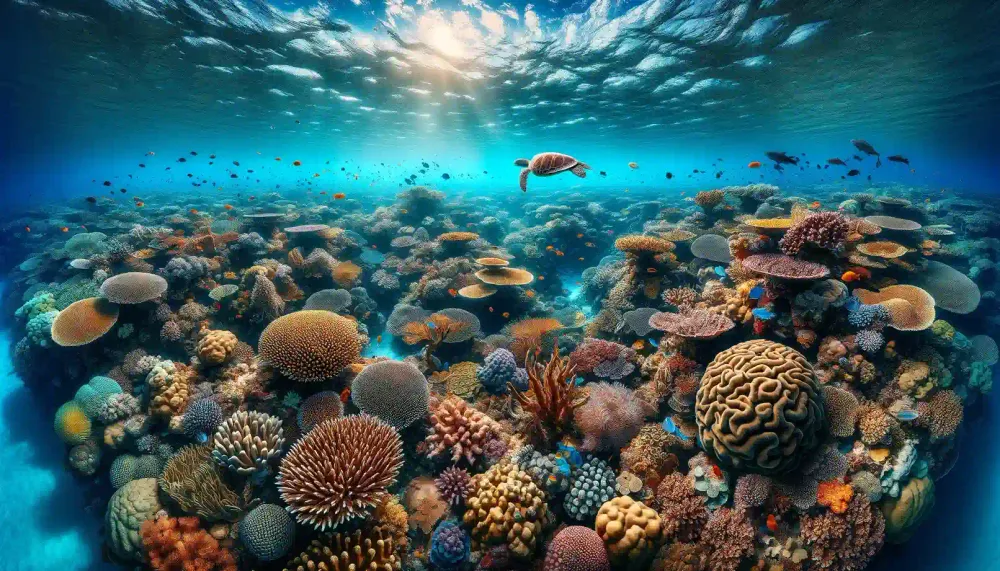
The reefs around Savusavu — and specifically the Namena Marine Reserve to the south — represent the primary reason serious divers make the effort to reach Vanua Levu. The Koro Sea reefs are in consistently better condition than the reefs closer to Viti Levu’s resort coast, and the marine life density and diversity reflect that. Hammerhead sharks, grey reef sharks, silvertip sharks, eagle rays, manta rays in season, enormous schools of barracuda, and soft coral formations of a scale and health that astonish even experienced divers — this is what the Savusavu reefs offer, and it is not an exaggeration.
Namena Marine Reserve is the headline diving destination in the Savusavu region. Located roughly 35 kilometres south of Savusavu in the Koro Sea, Namena is a designated marine protected area covering a submerged ridge system that creates conditions for extraordinary biodiversity — nutrient-rich currents that feed enormous soft coral gardens, aggregations of pelagic species, and reef structures that descend in steps from the surface to depths well beyond recreational diving limits. A permit is required to dive in the reserve (fees go towards conservation management), and access is via boat from Savusavu with one of the local dive operators. The journey takes 45 minutes to an hour by fast boat. The diving itself requires reasonable experience — some of the sites involve currents and require drift-diving capability — but for divers with that background, Namena consistently ranks among the finest sites in the entire Pacific.
The main dive operators in Savusavu are Dive Savusavu, based at the Copra Shed Marina, and the dive operation at Jean-Michel Cousteau Resort. Dive Savusavu runs organised dive trips to both local bay reefs (for those who want gentler, shallower diving) and to Namena Marine Reserve. Equipment rental is available. Two-tank dives to local sites typically cost around FJD $250–$320; Namena expeditions cost more due to the longer boat journey and permit fees — expect FJD $380–$480 per person for a full day at the reserve.
The Jean-Michel Cousteau Resort dive operation is primarily for resort guests but may accommodate outside divers by arrangement — worth enquiring if you’re staying elsewhere. The resort has built its entire brand around marine conservation and diving, and its dive guides are experienced, knowledgeable, and oriented towards understanding the reef rather than just visiting it.
Snorkelling in Savusavu Bay and around the bay’s shallower reefs is accessible and rewarding for non-divers. The bay itself has patches of healthy coral and resident reef fish populations, accessible directly from some of the smaller resorts and by boat from the marina. It is not the same calibre as Namena — nothing snorkellable is — but the water quality is good and the reef life is interesting enough to justify the time.
Dolphin encounters in the waters around Savusavu and in the approaches to Namena are a regular feature of boat trips to the reserve — spinner dolphins and bottlenose dolphins are frequently seen in these waters, and the experience of watching a bow-riding pod while crossing the Koro Sea to a dive site is a good introduction to why this stretch of ocean has the reputation it does.
Where to Stay
Savusavu’s accommodation range is genuinely broad, running from one of Fiji’s finest ultra-luxury resort properties to simple guesthouses in town. The right choice depends entirely on what you want from the destination.
Namale Resort & Spa is, by most measures, Fiji’s most complete luxury resort experience. Set on a clifftop property east of Savusavu with its own private beach, rainforest, waterfalls, and volcanic hot springs, Namale is all-inclusive and adult-only — a deliberate positioning that allows it to focus entirely on the experience of guests who have come specifically for it. The spa operation is widely regarded as the best in Fiji. The accommodation — private bures and villas spread through the resort’s grounds — is architecturally ambitious and immaculately maintained. Rates reflect all of this: expect to pay from around FJD $3,000–$5,000+ per night per couple, all-inclusive. It is not for everyone and it is not meant to be. For the guest for whom this is the right fit, it is genuinely exceptional.
Jean-Michel Cousteau Resort occupies a different position: mid-to-high luxury with a genuine environmental ethos. Named for the ocean conservationist son of Jacques Cousteau, the resort has been operating on its Savusavu bay property for decades and has built a reputation that goes beyond marketing. The children’s programme — Bula Club — is frequently cited as one of the best kids’ resort programmes in the Pacific, making the Cousteau an unusual choice in that it serves both couples who care about conservation diving and families who want their children meaningfully engaged. Accommodation is in traditional bures spread along the beachfront and gardens; the design is elegant without being ostentatious. Rates run from around FJD $1,500–$2,500 per night, with a full board and activities structure that makes the price point more reasonable relative to what it includes.
Koro Sun Resort offers mid-range quality with a lagoon setting and a focus on diving. The property has its own freshwater pool, good gardens, and beachfront bures that represent solid value for what the Savusavu region asks. It’s a genuinely comfortable resort without the ultra-luxury price tag — rates from around FJD $500–$900 per night — and the diving focus makes it a practical base for guests who are here primarily for the Koro Sea reefs.
Savasi Island Resort sits on its own small island in Savusavu Bay, accessed by boat from the main town, and is oriented specifically towards adults seeking privacy and seclusion. The property is intimate — a small number of villas spread across the island — with private outdoor baths drawing from the local geothermal system and the kind of silence that is difficult to find anywhere on Viti Levu. Rates from around FJD $1,200–$2,000 per night. It suits couples who want complete privacy and don’t require an elaborate activities programme.
Daku Resort is the local favourite for budget-conscious travellers, and in particular for the diving and sailing community that makes Savusavu its base. Simple bures, a social atmosphere built around the pool and the bar, good information about local diving and activities, and a genuine lack of pretension. Rates from around FJD $150–$280 per night for bure accommodation. The resort is popular with long-term divers, people doing their dive certifications, and sailors who need a base ashore while working on their boats. It lacks the polish of the larger properties but makes up for it in character.
Hot Springs Hotel is the most central option in Savusavu proper — a simple, functional hotel on the main street with the produce market and waterfront within easy walking distance. Rooms are basic and clean, the price is right (from around FJD $100–$180 per night), and the location makes it the best base for anyone who wants to use Savusavu town as a home base rather than settling into a resort property. It does what it does without embellishment, which is sometimes exactly what’s required.
Where to Eat
Savusavu’s dining scene is limited in number but generally genuine in quality. It does not have the volume of restaurant options you’d find on Viti Levu’s resort coast, and the choice narrows further once you move away from the Copra Shed Marina area — this is something to be aware of and plan around rather than be disappointed by.
The Copra Shed Marina restaurants are the reliable centre of Savusavu’s dining, and the location — overlooking the marina, with the bay behind and the hills beyond — is as good as the food at the better places. The Surf & Turf Café at the marina has been a consistent performer for years, serving fish, grills, and Fijian-influenced plates that make proper use of what is locally available. Mains run FJD $28–$55. Arrive at dusk when the sailing yachts in the marina are lighting up and the hills across the bay are going dark, and the setting does a lot of work for whatever is on the plate.
The Planters Club is a piece of colonial Fiji that has, against all probability, survived intact. The building is a weathered wooden structure that dates from the days when Vanua Levu’s European planters gathered here — originally as a social club for the colonial farming community. It is now effectively a public bar and restaurant where locals, expats, and visitors mix in a way that feels entirely unstaged. The food is simple and the atmosphere is unrepeatable. It is the kind of place that travel writers used to describe as “a true original,” which it still is, meaning it is worth visiting for what it is rather than what it serves.
For genuinely local food, the cafés and simple restaurants along Savusavu’s main street serve Fijian and Indo-Fijian cooking at prices that are considerably more accessible than the marina restaurants. A curry lunch at one of the main street cafés — dhal, roti, vegetable or meat curry — costs FJD $8–$15 and is typically good. The produce market is the place for fresh fruit and vegetables: buy whatever is in season, find shade, and eat it looking at the bay.
The resort restaurants at Jean-Michel Cousteau and Namale are the best dining in the Savusavu region by some distance, but both are primarily designed for their own guests. The Cousteau Resort restaurant can occasionally accommodate outside diners with advance reservation; Namale is strictly all-inclusive and private. If you are staying at either property, the dining is worth taking seriously — the produce quality is excellent and the kitchens cook to a standard that reflects the calibre of the properties.
Activities
The main draw of Savusavu for most visitors is clear: diving and snorkelling in the Koro Sea reefs and Namena Marine Reserve, covered in full in the Diving section above. But the town and its surrounds offer more than the underwater world.
Kayaking and stand-up paddleboarding in Savusavu Bay are available through most resort properties and through the marina operators. The bay is calm, sheltered, and visually interesting — ringed by green hills, dotted with moored vessels, and close enough to the hot spring vents to provide the occasional surreal experience of paddling above geothermally warmed water. Morning paddles before the wind picks up are the standard recommendation.
Sailing in the Savusavu region is a serious proposition. The Copra Shed Marina can facilitate yacht charters for day trips and multi-day passages — the Yasawa Group is reachable on a multi-day charter, and shorter passages around Vanua Levu’s coast and to nearby islands are well-suited to day sailing. For those without their own sailing experience, several of the liveaboard yachts based at the marina offer passage berths as crew, which is the most affordable way to experience what the sailing community experiences here.
Vanilla plantation tours are a Savusavu speciality that most visitors don’t know to look for. The Savusavu area is one of Fiji’s primary vanilla-growing regions, and several small plantation operations offer tours showing the cultivation and curing process. Vanilla cultivation is labour-intensive — the flowers must be hand-pollinated, and the curing process for the beans takes months — and the tours are genuinely interesting as an agricultural experience as well as producing the obvious opportunity to buy fresh vanilla at source. Ask at your accommodation or at the Copra Shed Marina for current plantation tour options; the industry is small and the tours are not heavily marketed.
Hiking in the hills above Savusavu rewards those willing to work for the views. The hills that ring the bay are densely vegetated and rise sharply from the waterfront — a proper climb brings you quickly above the tree line to open ridge views that look south across the Koro Sea and north into Vanua Levu’s interior. There are no formal trail systems equivalent to what you’d find on the Coral Coast; locally guided walks are the practical approach and can be arranged through several of the resort properties and through contacts at the marina.
Fishing in Koro Sea waters is available through charter operation from the marina. The fishing in these waters — big-game trolling for tuna, mahi-mahi, and wahoo — is productive and the marine environment supports healthy fish populations. Half-day and full-day charters can be organised from the marina; pricing varies by vessel and party size.
Day Trips from Savusavu
Namena Marine Reserve is the most rewarding day trip available from Savusavu and by some margin. The journey south by fast boat across the Koro Sea takes roughly 45 minutes to an hour and deposits you at one of the Pacific’s genuinely exceptional marine protected areas. A full day at Namena typically involves two or three dives, with surface intervals spent on the boat or on the small sandbank at the reserve’s northern end. Snorkellers can participate in the boat trip and access some of the shallower reef areas, though the best of Namena is deeper than snorkelling reaches. Book with Dive Savusavu or through your resort’s dive operation.
Waterfalls in the hills above Savusavu are accessible on guided half-day walks — the rivers that flow down Vanua Levu’s steep southern hills create a series of cascades in the rainforest above town. These are not heavily publicised or commercialised attractions; ask locally for current guide contacts. The walks involve proper jungle hiking rather than groomed trail walking, and a local guide who knows the terrain is the right approach.
Boat trips around the bay and to nearby islands can be organised through the marina for shorter half-day excursions — island-hopping in the immediate vicinity of Savusavu Bay, snorkelling over the shallower bay reefs, or simply exploring the coast that rises to either side of the bay entrance. These are flexible, informal arrangements rather than packaged tours, which is consistent with the general character of Savusavu as a place.
Exploring Vanua Levu’s coast by road east and west of Savusavu gives access to smaller villages, agricultural land, and coastline that sees very few visitors. The road east towards Natewa Bay passes through genuinely remote territory before the sealed surface gives out. The drive west towards Labasa, Vanua Levu’s larger northern town, is a half-day journey through sugarcane country that feels like a different world from the Savusavu marina scene. Neither of these is a tourist excursion — they are simply what is there when you are willing to drive.
The Expat and Sailing Community
The quality that most distinguishes Savusavu from every other destination in Fiji — and the thing that keeps people here longer than they planned — is its community. Savusavu has accumulated a population of long-term expatriates unlike any other small Fijian town. Some arrived on yachts and stayed when the boat moved on. Some are retirees from New Zealand, Australia, the United States, and Europe who came looking for somewhere genuinely warm and unhurried and found it. Some are working in the regional development, conservation, and education sectors. Some are simply people who prioritised quality of daily life over career convenience and made the calculation that a small town on Vanua Levu offered more of what they actually wanted than anywhere larger.
This community is not insular. The size of the town ensures that the expat residents, the local Fijian and Indo-Fijian population, and the constant stream of visiting sailors and divers mix in ways that larger places prevent. The marina bar at dusk is a social institution. The produce market is not a tourist attraction but the place where everyone shops. The sailing yachts at anchor represent some of the more interesting and experienced ocean travellers you will encounter anywhere — people who have crossed the Pacific, the Indian Ocean, or both, who have opinions about anchorages and wind patterns and which islands in the archipelago are worth the effort, and who are generally pleased to share those opinions if you approach the conversation with genuine interest.
This is what makes Savusavu genuinely different from the resort-island experience that defines most visitors’ understanding of Fiji. There is no manufactured Fijian culture here — no kava ceremony staged for coach passengers, no meke performance timed to the transfer schedule. What you find instead is a small town living its own life, tolerant of visitors and occasionally enriched by them, but fundamentally oriented around its own rhythms rather than yours.
Planning Tips
How long to spend: The minimum meaningful visit to Savusavu is three nights, which allows you one day to get oriented (arrive, walk the town, visit the hot springs and market, have dinner at the marina), one full day on the water (diving or the Namena day trip), and a third day for a land-based activity and a slower wind-down. Five nights is the better option — it allows for multiple dive days, a vanilla plantation visit, a proper hike, and the kind of purposeless afternoon sitting at the marina watching the boats that is the best possible use of time in Savusavu.
Best time to visit: The dry season from May through October offers the most reliable weather and the best diving conditions — clearer water, calmer sea states, and the best visibility at Namena. June through August is peak season; book flights and accommodation well in advance, as capacity is limited. The wet season from November through April brings higher temperatures, more rain, and occasional cyclone risk — Vanua Levu is not immune to cyclone paths — but the diving remains broadly good and accommodation rates drop meaningfully. The wet season also brings the chance of manta ray encounters in the waters around the Koro Sea, as mantas follow the planktonic blooms that the wet season rains encourage.
Combining with Taveuni: Savusavu and Taveuni are natural companions. Taveuni — Fiji’s third-largest island, known as the Garden Island for its extraordinary vegetation and as the location of the Rainbow Reef, arguably Fiji’s most famous dive site — is approximately one hour from Savusavu by domestic flight (Fiji Link flies the route) or by ferry. The combination of Savusavu and Taveuni in a single itinerary gives you two entirely different Fijian island experiences without the Viti Levu overlay. Allow at least three nights in each place if you take this approach.
Mobile connectivity: Savusavu has better connectivity than most of Fiji’s outer island destinations. Vodafone and Digicel both provide reasonable coverage in town and along the main roads. Data speeds are functional rather than fast — sufficient for email, messaging, and basic online tasks, less reliable for video calls or streaming. Once you move into the hills or along the more remote coastal roads, coverage drops away quickly.
Cash: Savusavu has ATMs and most of the larger establishments accept credit cards, but carrying FJD cash is advisable — the market, local cafés, smaller vendors, and taxi drivers all operate on cash. Withdraw in Savusavu town rather than assuming ATM availability elsewhere on Vanua Levu.
Final Thoughts
Savusavu requires a small but deliberate investment of effort to reach — a domestic flight, a ferry crossing, a degree of commitment to being somewhere that is not on the standard Fiji itinerary. That investment is returned many times over. The diving at Namena is the kind of experience that recalibrates your understanding of what a healthy reef system looks and feels like. The town itself, with its hot springs and its marina and its rolling cast of sailors and retirees and local fishermen, is alive in ways that purpose-built resort precincts are structurally incapable of being. The hills above the bay are genuine rainforest. The vanilla grown in the valley behind town is the real thing, and you can buy it from the person who planted it.
Savusavu’s lack of polish is not a deficit — it is the mechanism by which the place remains itself. The two travellers who arrive planning two nights and extend to two weeks are not making an irrational decision. They have found somewhere that operates at a pace and with a quality of everyday life that is genuinely difficult to leave behind. The flights are regular enough, the town is comfortable enough, and the diving is extraordinary enough. If your trip to Fiji can accommodate the detour north across the Koro Sea, take it.
Frequently Asked Questions
How do I get to Savusavu from Nadi?
The most straightforward route is a direct Fiji Link domestic flight from Nadi to Savusavu Airport. The flight takes approximately 45 minutes and operates regularly throughout the week. Fares typically range from FJD $280–$450 return, depending on when you book and the season. Book as early as possible, as the aircraft are small and popular routes fill up quickly. The alternative is the Patterson Brothers overnight ferry from Natovi (north of Suva, about 90 minutes from Nadi Airport) to Savusavu — a crossing of approximately 12–14 hours that is an adventure in itself. The ferry is significantly cheaper and considerably slower, but it is a legitimate option for travellers who want the full experience of arriving by sea.
Is Savusavu suitable for non-divers?
Yes — though diving is the primary reason most people make the effort to travel to Savusavu, the town and its surrounds offer plenty beyond the underwater world. The town itself is genuinely interesting: the Copra Shed Marina, the geothermal hot springs, the produce market, the sailing community, and the wider social life of the place are all rewarding even if you never put on a mask. Vanilla plantation tours, hiking in the hills, kayaking in the bay, day trips to local waterfalls, and simply exploring Vanua Levu’s coast by car are all available. That said, if you have no interest in water-based activities at all, Savusavu’s appeal is somewhat more specialised. Divers, snorkellers, sailors, and travellers who appreciate an unhurried town with a genuine international community will get the most from it.
What is Namena Marine Reserve and is it worth the extra cost?
Namena Marine Reserve is a protected marine area approximately 35 kilometres south of Savusavu in the Koro Sea. It covers a submerged ridge system that creates exceptional conditions for marine biodiversity — nutrient-rich currents, dense soft coral gardens, and aggregations of pelagic species including hammerhead and grey reef sharks, eagle rays, and enormous schools of barracuda. A permit is required to dive in the reserve, and the dive itself is a full-day commitment from Savusavu by fast boat. The total cost — dive fees, permit, and boat — typically runs FJD $380–$480 per person. For divers with sufficient experience (drift diving capability is useful for some sites), Namena consistently ranks among the finest dive sites in the Pacific. It is absolutely worth the extra cost for anyone who has come to Savusavu primarily to dive.
What is the best accommodation in Savusavu?
It depends entirely on budget and priorities. For ultra-luxury, Namale Resort & Spa is the standout — all-inclusive, adults-only, with an exceptional spa and private beach setting (from FJD $3,000+ per night). For a balance of quality and environmental ethos with a good family programme, Jean-Michel Cousteau Resort is the most respected property in the region (from FJD $1,500 per night). For mid-range diving-focused accommodation, Koro Sun Resort offers solid value (from FJD $500 per night). For budget travellers, divers, and sailors wanting good value in a social atmosphere, Daku Resort is the long-established choice (from FJD $150 per night). For a simple, central base in Savusavu town itself, the Hot Springs Hotel is the most practical option (from FJD $100 per night).
How does Savusavu compare to the Yasawa Islands?
The comparison reveals how different the two destinations are. The Yasawas offer the classic Fiji visual — white-sand beaches, turquoise lagoons, and resorts that are physically isolated on small islands — in a setting that is beautiful but somewhat uniform. Savusavu is about a real, functioning town with its own social life, world-class diving that is inaccessible from the Yasawas, and a community of long-term residents and cruising sailors that gives the place a depth and unpredictability the Yasawas’ resort model doesn’t accommodate. The Yasawas are about the beach. Savusavu is about everything that exists around and beneath a particular stretch of the Koro Sea, and the town that has grown up around that. Both are worth visiting, and they deliver entirely different experiences.
When is the best time to visit Savusavu?
The dry season from May through October is the optimal period — clear weather, lower humidity, and the best visibility for diving, with calmer sea states for the boat crossing to Namena. Peak season (June–August) means higher accommodation rates and limited availability at the better properties; book well in advance. The wet season from November through April brings more rain, higher temperatures, and some cyclone risk, but the diving remains good — visibility in the Koro Sea is typically still excellent — and accommodation rates drop by 20–40%. The wet season also corresponds to increased manta ray activity in the surrounding waters. Savusavu operates year-round, and there is no period when it shuts down or becomes genuinely difficult to visit.
Can I combine Savusavu with Taveuni?
Yes, and this is one of the more rewarding Fiji itinerary combinations available. Taveuni — the Garden Island — is approximately one hour from Savusavu by Fiji Link domestic flight or by ferry, and it offers a completely different experience: extraordinary tropical vegetation, the Bouma National Heritage Park waterfalls, and the Rainbow Reef (home of the Great White Wall, one of Fiji’s most famous dive sites). A combined Savusavu and Taveuni itinerary — three to five nights in each — gives you a two-island Fijian experience centred on Vanua Levu rather than the well-worn Viti Levu resort corridor. Allow enough time in both places to settle in properly; a one-night stop in either is insufficient.
By: Sarika Nand