Published
- 26 min read
A Guide to Kadavu Island, Fiji
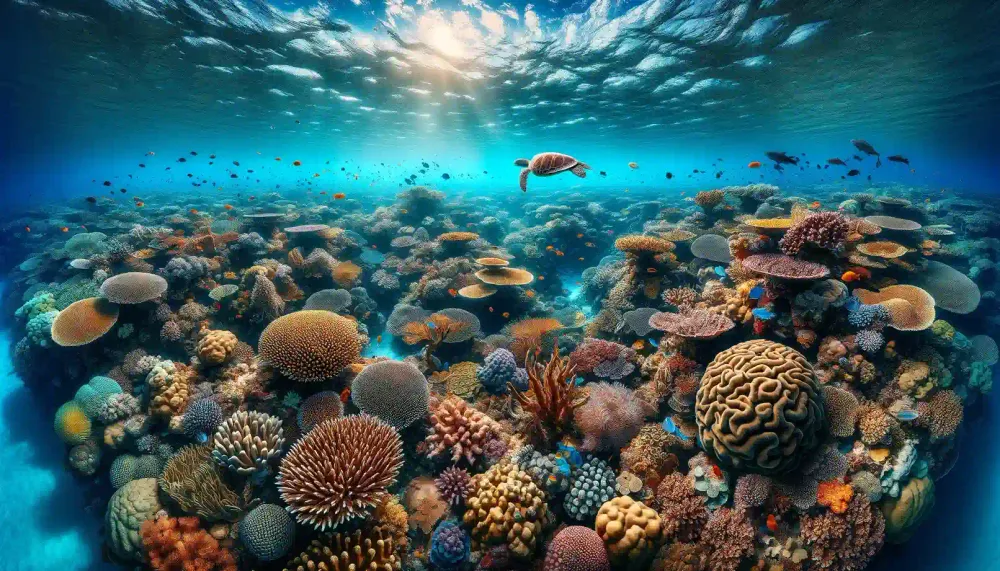
There is a particular kind of pleasure that comes from finding a place before it has been thoroughly found. Kadavu — Fiji’s fourth largest island, roughly 90 kilometres south of Viti Levu across open ocean — still offers that experience. It does not have a resort strip. It does not have a beach club or a sunset cruise operation or a waterpark. What it has is the Great Astrolabe Reef, one of the world’s largest barrier reefs and a dive destination that serious underwater photographers and marine biologists discuss in the same breath as the Coral Triangle and the Red Sea. The visitors who make it here are, for the most part, people who have specifically sought it out — or people who stumbled across it in conversation and are now very glad they followed the thread.
The character of Kadavu is forested and traditional in ways that distinguish it sharply from Fiji’s more developed tourist corridors. The island’s interior is a tangle of cloud-catching ridges and dense tropical vegetation; the coastline alternates between dramatic headlands and narrow black-sand beaches. There are no roads connecting the villages that dot the island’s shores — boats are how people move, how supplies arrive, and how resorts collect their guests. The population lives largely as it has for generations, in traditional settlements where village protocols apply and where visitors are welcomed with a warmth that owes nothing to the tourism industry’s training manuals. Kadavu is not performing authenticity for anyone. It simply is what it is.
Be clear about who this island suits before you book a flight. Kadavu is not the right choice if you want a resort with a swim-up bar, a choice of restaurants, manicured beach access, or easy day-trip infrastructure. It is the right choice — an exceptional choice — if you are a diver, a birdwatcher, or someone who finds that the absence of tourist infrastructure is itself the point. The island’s few accommodation options are designed around the reef, and almost everything on Kadavu ultimately refers back to the water. If you can dive, or are willing to learn, this island will deliver something that Fiji’s more visited islands cannot.
Getting There
Kadavu is served by Vunisea Airport, a small landing strip in the island’s centre that accepts only light propeller aircraft. Fiji Link — the domestic arm of Fiji Airways — operates scheduled flights from Suva’s Nausori Airport to Vunisea, with a flight time of approximately 30 minutes. Visitors travelling from Nadi will need to connect through Suva, adding two to three hours to the journey depending on connection timing. It is worth building this connection time conservatively — domestic schedules in Fiji operate in a different relationship with punctuality than international routes, and missing an onward connection to Kadavu typically means an unplanned overnight in Suva.
The aircraft operating the Vunisea route are small — twin-engine turboprops in the Beechcraft or ATR class — and the baggage implications are significant. Hard limits of 10 to 15 kilograms apply on these routes, and they are enforced. This matters particularly for divers travelling with their own equipment: a full set of diving kit, a BCD, fins, regulators, and a wetsuit can consume most of a baggage allowance before clothing is added. Check your specific allowance at the time of booking, not as an afterthought. Many divers travelling to Kadavu hire equipment from their resort’s dive operation rather than attempting to transport their own; the quality of hire gear at the island’s dedicated dive resorts is generally good, and the trade-off in convenience is worth it for most travellers.
There is no passenger ferry service operating between Viti Levu and Kadavu. A government supply vessel does make the crossing periodically, carrying cargo and supplies to the island’s villages, but it is not set up as a tourist transport service and should not be planned around. The only practical route for visitors is the Fiji Link flight. Once on the island, transfers to accommodation are by boat — Vunisea Airport sits on the island’s central isthmus, and most resorts are a boat ride away from the landing strip. Arrange your transfer before you arrive; the resorts expect this and will organise it with you. Some properties, including the more remote eco-resorts, are accessible only by water regardless of starting point.
The Great Astrolabe Reef
The Great Astrolabe Reef is the reason Kadavu appears on the bucket lists of serious divers worldwide, and understanding its scale helps explain why. The reef encircles the southern and eastern sides of Kadavu and the smaller islands of the Kadavu Group, forming a barrier system that extends for approximately 100 kilometres. It is one of the world’s largest barrier reefs — not in the scale of the Great Barrier Reef in Australia, but genuinely in a category alongside the world’s other great reef systems in terms of its health, diversity, and the quality of the diving it offers. The reef takes its name from the French corvette L’Astrolabe, which surveyed these waters in the 1820s under the command of Jules Dumont d’Urville — one of the Pacific’s most significant early European mapping expeditions.
The conditions that make the Great Astrolabe extraordinary are the same conditions that have kept it largely undiscovered. The crossing from Viti Levu is open ocean; the island has no mass-tourism infrastructure; and the dive sites, while absolutely world-class, require that you actually be on Kadavu to reach them rather than day-tripping from a distant hotel. This self-selecting dynamic has kept visitor numbers low and the reef in exceptional condition. Coral coverage, both hard and soft, is dense and healthy across most of the Great Astrolabe’s explored sections. Fish biomass is noticeably higher than on more visited Fiji reefs. Sharks — grey reef, whitetip reef, and occasional hammerhead — are present in numbers that would be remarkable on reefs with more fishing pressure.
Naiqoro Passage is the Great Astrolabe’s flagship dive site, and its centrepiece is a manta ray cleaning station that operates with a regularity that makes it one of Fiji’s most reliable manta encounters. The passage is a channel through the reef where current draws nutrient-rich water across shallow coral formations; the mantas arrive to be cleaned by small wrasse, hanging in the current above the reef with their cephalic fins extended. The soft coral coverage in Naiqoro Passage is spectacular — dramatic formations in deep purple, orange, and white that respond to the tidal flow and create a background to the manta encounters that would be worth the dive even without the rays. This is the site most visitors prioritise, and rightly so.
Broken Stone is a pinnacle dive that rises from the sand bottom to within about 10 metres of the surface, attracting the larger pelagic species that make deep open-water structures irresistible to marine life. Grey reef sharks patrol the pinnacle’s upper sections; schools of barracuda and trevally are regular residents; the wall surfaces of the pinnacle are encrusted with hard coral and sponge growth in dense, layered formations. This is a more advanced dive than Naiqoro Passage — depth, current, and the occasional surge from passing swells require confident buoyancy control and some experience managing open-water conditions. The rewards are commensurate with the demands.
Coral Gardens occupies the opposite end of the experience spectrum: a shallow, sheltered section of reef in five to fifteen metres of water, with exceptional hard coral coverage, abundant reef fish, and the kind of gentle conditions that make it appropriate for recently certified divers or those returning to diving after a break. The name is accurate — it is genuinely garden-like, with plate corals, brain corals, and staghorn formations creating structure that shelters an improbable density of small reef life. It is also an excellent snorkelling site for non-divers willing to jump off a boat.
Side Streets is a distinctive site built around a series of narrow channels and swim-throughs that cut through large coral formations, creating corridors of soft coral growth lit by shafts of filtered sunlight. Visibility in these channels allows you to see clearly the length of each passage before entering; the swim-throughs are wide enough to navigate comfortably in full dive gear. It is a site best dived slowly, with attention to the detail rather than the distance covered — the growth on the channel walls repays close inspection in a way that open-water dives do not.
Visibility across the Great Astrolabe consistently reaches 20 to 30 metres during the dry season, and even in the wet season rarely drops below 15 metres except immediately after heavy rain. Water temperature ranges from around 25°C in the coolest months to 29°C in summer. A 3mm wetsuit is sufficient for most divers year-round; those who feel the cold may want 5mm for longer or deeper dives.
Manta Rays at Kadavu
Manta rays have become one of Kadavu’s defining attractions, and the island deserves its growing reputation as one of Fiji’s most reliable manta destinations. While the Yasawa Islands — particularly the area around Drawaqa Island — receive far more attention as a manta encounter location, Kadavu’s Great Astrolabe Reef offers encounters that are frequently superior in duration and in the conditions under which they occur. The mantas at Naiqoro Passage are observed at a cleaning station rather than simply swimming through open water, which means they are stationary, predictable, and relatively tolerant of divers who approach with care and patience.
The reef manta ray (Mobula alfredi) is the species most commonly encountered here — disc widths of two to three metres are typical, and individuals in the four-metre range are not unusual. Oceanic manta rays (Mobula birostris) occur less frequently in the Great Astrolabe but are occasionally recorded at deeper sites. The cleaning station dynamic at Naiqoro Passage means that encounters can be extended — a single dive may offer 20 to 40 minutes of manta observation, a very different proposition from a brief open-water crossing.
The best months for manta encounters at Kadavu are generally May through October, aligning with the dry season and the period when cooler water temperatures and increased plankton productivity bring the rays into the passages on a more predictable schedule. Encounters outside this window are possible — mantas are present in the Great Astrolabe year-round — but the dry season months offer the highest probability of a sighting. Snorkelling encounters at the cleaning station are possible and are offered by several of the island’s resorts for guests who do not dive; the mantas at Naiqoro Passage are not spooked by snorkellers on the surface provided approaches are made calmly and without aggressive swimming.
The Koro-i-wau Passage and the South Astrolabe
The Great Astrolabe Reef is the headline, but the Kadavu Group encompasses a second major reef system to the south: the South Astrolabe, bisected by the Koro-i-wau Passage. This area receives a fraction of the already modest visitor traffic that reaches the Great Astrolabe — the logistics of getting there from Kadavu’s resorts are more demanding, the distances are greater, and there are virtually no permanent tourist facilities in the area.
What the South Astrolabe offers in return for that inaccessibility is reef in a state of near-pristine condition. The coral formations here have seen very little diver impact. Fish populations are dense, shark sightings are frequent, and the soft coral growth in the deeper sections of the Koro-i-wau Passage rivals anything on the Great Astrolabe’s headline sites. The liveaboard diving vessel Pacific Voyager, which operates in the Kadavu Group, is one of the few platforms that covers the South Astrolabe extensively — a liveaboard itinerary is essentially the only practical way to explore this reef system in any depth.
For visiting divers who make it as far as Kadavu, the South Astrolabe is a compelling reason to extend the stay or to consider a liveaboard option rather than a land-based resort. It represents the outer edge of what is already an off-the-beaten-track destination — and it is, accordingly, spectacular.
Birdwatching: The Kadavu Parrot and Kadavu’s Endemic Species
Kadavu holds a distinction that places it on the itinerary of serious birdwatchers from across the Pacific: the island is home to three endemic bird species found nowhere else on Earth. This is not a casual natural history footnote. For dedicated listers and ornithologists, three endemics on a single island of modest size makes Kadavu an obligatory stop, and the density of intact native forest habitat means that all three can realistically be found in a single morning’s birding.
The Kadavu Musk Parrot (Prosopeia splendens) — known locally as the kula — is the island’s most spectacular endemic and one of the most visually arresting parrots in the Pacific. It is a large bird, approaching 50 centimetres in length, with plumage that combines deep crimson, emerald green, and blue in combinations that seem too vivid to be naturally occurring. It inhabits the native forest interior and is typically encountered in pairs or small groups feeding in the forest canopy, announcing their presence with loud, distinctive calls before they are seen. The Kadavu Musk Parrot is related to the Crimson Shining Parrot of the Lau Group but is endemic to Kadavu and the nearby islands of Ono and Galoa. Hearing one in the canopy above a forest trail and then finding it perched and visible in good light is one of the Pacific’s genuinely outstanding birdwatching moments.
The Kadavu Fantail (Rhipidura personata) is a small, active flycatcher-type endemic to the island — a member of the fantail family that inhabits forest edge and interior, where it moves with the restless, fan-spreading behaviour characteristic of the genus. It is less visually dramatic than the parrot but a genuine endemic and a bird that experienced listers will specifically seek out.
The Kadavu Honeyeater (Xanthotis provocator) rounds out the island’s endemic trio — a medium-sized honeyeater inhabiting the island’s native forest and forest edge, less commonly encountered than the parrot but present throughout the island’s forested interior.
Beyond the endemics, Kadavu hosts a range of species shared with other Fijian islands — the Collared Lory, the Many-coloured Fruit-dove, the Pacific Koel, and various kingfisher and dove species — making a morning’s birding productive even after the endemics have been found. The island’s forests are intact enough that early-morning walks from any of the island’s eco-oriented resorts will produce a genuinely memorable birdwatching session. First light to around 9am is the critical window; bird activity drops off significantly in the heat of the late morning. Good binoculars are essential, and a copy of a Fiji field guide — H. Douglas Pratt’s Birds of Fiji remains the standard reference — is strongly recommended.
Village Life
Kadavu’s human geography is as distinctive as its natural character. The island’s population of around 10,000 people lives predominantly in traditional villages scattered along the coastline and on the smaller islands of the group. These villages are not connected by road — the island’s interior terrain makes road construction impractical across most of the distance between settlements, and the sea has always served as the highway. Boats carry people, produce, and school children between villages with the matter-of-fact regularity that road transport provides elsewhere.
This transportation reality has several implications for visitors. Resorts and guest accommodation are themselves typically reached by boat from the airport at Vunisea. Village visits, if arranged by your accommodation, involve a boat journey rather than a drive. The sense of each village being genuinely distinct — separated from its neighbours by open water — makes Kadavu feel considerably more fragmented and independent than Viti Levu’s coastal settlements, and this sense of distinctness is part of what gives the island its character.
The villages of Kadavu have a reputation within Fiji for being exceptionally welcoming to visitors. The relative absence of tourism infrastructure means that village encounters here are not mediated by a guide script or shaped by the performance of culture for paying audiences. When a village on Kadavu extends an invitation to participate in a kava ceremony, it is because the village community wants to, not because the activity is on a tour operator’s activity sheet. If you are visiting a village — and your resort can facilitate this — observe standard protocols: dress modestly (shoulders and knees covered), bring a sevusevu (a gift of kava root, available at the airport or from your resort), and accept that the pace of the visit will be set by the community rather than a schedule. Do not be in a hurry.
Where to Stay
Accommodation options on Kadavu are deliberately modest in number and deliberately specific in orientation. This is not a place with a range of resort categories to suit different preferences — it is a place where the available accommodation reflects the island’s character and visitor base. Book well in advance for dry-season travel; bed counts on Kadavu are low and popular properties fill months ahead.
Kokomo Private Island occupies its own private island within the Kadavu Group and occupies a category that can be described simply as ultra-luxury. It is one of Fiji’s most exclusive properties by any standard — the Great Astrolabe Reef at the property’s doorstep, a private island setting, accommodation in beautifully designed villas and residences, and service and facilities at the level of the world’s finest private island resorts. Kokomo is the option for guests for whom the normal vocabulary of luxury travel applies without qualification. The property’s position on the reef makes it arguably the finest-positioned diving resort in Fiji in terms of proximity to world-class sites.
Matava Resort is Kadavu’s most celebrated eco-resort and, for many visitors, the island’s representative property. The resort is built into a hillside above the water with treehouse-style bures constructed from natural materials, a genuine commitment to sustainable and low-impact operation, and a diving programme that is among the most serious on the island. It is not a luxury property — the accommodation is simple, the setting is dramatic, and the appeal is entirely about the environment and the diving rather than the amenities. For divers and nature-oriented travellers with a mid-range budget and a preference for authentic over polished, Matava is consistently excellent. Meals are typically included.
Tiliva Resort is the island’s entry-level option for visitors whose primary purpose is diving and who want to keep accommodation costs modest. The property is simple and functional, with a focus on putting guests in the water on the Great Astrolabe Reef at maximum frequency. It attracts solo divers, dive groups, and returning guests who have stripped the trip down to its essential purpose. It is a practical, unpretentious base and is well-regarded within the diving community for exactly those qualities.
Pacific Voyager is a liveaboard diving vessel operating in the Kadavu Group and the only practical platform for visiting the South Astrolabe and Koro-i-wau Passage in depth. Liveaboard diving — living aboard the vessel, eating on board, and diving five or more times per day from zodiacs — is the appropriate format for divers who want to cover maximum ground across both reef systems. Pacific Voyager itineraries typically run five to seven nights and are designed around the reef’s tidal patterns and seasonal conditions. This option is suited to experienced divers with a serious purpose; it is not the right format for a first Fiji trip or for anyone who wants land-based comfort after diving.
Activities
Diving is overwhelmingly the primary activity on Kadavu and the reason most visitors come. If you are not a diver and have no interest in becoming one, it is worth pausing before booking flights to consider whether Kadavu’s other merits are sufficient to carry your trip. They can be — but you should be deliberate about this rather than arriving expecting a diversified activity programme.
Snorkelling at sites like Coral Gardens and sections of the reef accessible by boat from the resorts is genuinely rewarding. The reef health across the Great Astrolabe means that surface snorkelling offers encounters with fish life and coral formations well above what most Fiji reef snorkelling delivers. Manta ray encounters are possible from the surface at Naiqoro Passage for non-divers, provided conditions are suitable and approaches are managed calmly.
Kayaking is available through most resorts and is an excellent way to explore Kadavu’s coastline at a personal pace. The island’s sheltered inlets and the calm water between the island and the reef provide conditions suited to sea kayaking, and the coastline repays slow exploration — birdwatching from a kayak in the early morning, pulling into small beaches, and observing the detail of the shoreline forest edge are all available to anyone willing to paddle.
Village visits are facilitated by most resorts and represent a significant part of what Kadavu offers to the culturally curious traveller. The encounters are genuine in a way that village tours on Viti Levu’s tourist circuit are not. Kava ceremonies, demonstrations of traditional skills, and the ordinary social life of communities going about their routines are all visible here in a way that feels unmediated.
Birdwatching from forest trails near the resorts and from boat transfers between locations provides access to all three of Kadavu’s endemics for dedicated birders. The Kadavu Musk Parrot in particular is a species that birders making special trips to the island have consistently been able to find without specialist guiding.
Hiking into Kadavu’s forested interior is possible from several resorts, though trails are not always formally maintained and conditions can be demanding. Dense tropical forest, steep terrain, and high humidity make any hike here a serious physical undertaking — but the forest interior, away from the coast and the reef, has a character and a silence that rewards the effort. Discuss options with your resort before setting out independently.
Fishing in the waters around the Great Astrolabe — both trolling and reef fishing — is available through resorts and offers the opportunity to fish over some of the most productive and least-pressured waters in the Fiji group.
Planning Tips
How long to spend: Four nights is the practical minimum for a Kadavu visit — barely enough to cover the key dive sites and feel the island’s pace. For serious divers, seven nights or more allows multiple dives across the Great Astrolabe’s main sites, repeat visits to Naiqoro Passage for manta encounters, and the relaxed schedule that the island’s character rewards. Given the logistics of getting here — the connection through Suva, the baggage constraints — a short trip is not cost-effective in terms of either time or money. If you are making the journey, commit to a week.
Best time to visit: May through October is optimal. Visibility on the Great Astrolabe is at its highest during these months, sea conditions between Viti Levu and Kadavu are more settled, and the manta ray season at Naiqoro Passage is at its most reliable. The wet season (November to April) brings reduced underwater visibility, heavier rain, and the possibility of flights being disrupted by weather — Vunisea Airport’s small landing strip has limited tolerance for low cloud and reduced visibility. That said, Kadavu’s reef is healthy year-round and diving continues throughout. If your dates are fixed within the wet season, the island remains well worth visiting — but manage expectations on visibility and weather flexibility.
What to pack: Waterproof bags are not optional — they are essential on Kadavu. Everything that cannot get wet must be in a dry bag or waterproof case, and this means everything: phones, cameras, documents, medication, dry clothing. Boat transfers from the airport expose luggage to sea spray, and the island’s rain can arrive without warning. Reef-safe, mineral-based sunscreen is strongly preferred — the Great Astrolabe’s reef health is part of what makes it extraordinary, and chemical sunscreens are actively harmful to coral systems. Bring all medication you require for your stay; there are no pharmacies on Kadavu and no guarantee of medical supplies beyond basic first aid at most resorts. Cash in Fijian dollars — most resorts are cash-only or have very limited card facilities, and there are no ATMs on the island. Stock up before leaving Suva or Nadi.
Mobile coverage and communications: Mobile coverage on Kadavu is very limited. Some parts of the island have intermittent Vodafone Fiji signal; many parts have none at all. Wi-Fi at resorts, where available, is typically basic and not suited to video streaming or large data transfers. Approaching Kadavu with the expectation of genuine disconnection is not pessimistic — it is accurate. Notify family or contacts of your accommodation and expected communication schedule before you leave Viti Levu, and approach the absence of connectivity as part of what the island offers.
Meals and dining: Most of Kadavu’s resorts operate on an all-inclusive or half-board basis, for the simple reason that there is nowhere to eat out. There are no restaurants, cafes, or warungs accessible to tourists between resorts — the villages have no visitor food infrastructure, and the distances between properties are covered by boat. Your resort meals are your meals. The quality at the dedicated dive resorts is generally good — fresh fish and seafood from local catches, produce grown locally or brought from Viti Levu, straightforward but honest cooking. Do not arrive expecting variety; arrive expecting fresh food prepared simply and served in an extraordinary setting.
Kadavu is not suitable for all types of Fiji visitor — and this bears saying plainly. If you want a beach holiday with a swim-up bar, a choice of restaurants, reliable Wi-Fi, and easy access to activities and shopping, Kadavu will disappoint. It is not equipped for that kind of visit and is not trying to be. If you are a non-diver who specifically wants resort facilities and beach infrastructure, visit the Mamanuca Islands or the Coral Coast instead — those areas will serve you far better. Kadavu is for divers, for birdwatchers, for travellers who value remoteness and authenticity, and for people who have already done the more accessible Fiji and are looking for something harder to reach and more genuinely itself.
Final Thoughts
Kadavu rewards a specific kind of traveller with experiences that are, by any reasonable measure, world-class. The Great Astrolabe Reef — healthy, extensive, comparatively undived — is among the finest barrier reef diving destinations in the Pacific, and the manta ray encounters at Naiqoro Passage would justify the trip to Kadavu on their own. The three endemic bird species, the intact forest, the unmediated village life, and the island’s fundamental resistance to the normal apparatus of Fiji tourism all contribute to an experience that is emphatically distinctive. The island is asking something of you — logistics, planning, reduced comfort, and a willingness to leave reliable infrastructure behind — and it is returning something proportionate: a Fiji that most visitors to the country never see.
The things that make Kadavu inconvenient are also the things that make it what it is. The absence of roads and the boat-dependent logistics between settlements means the villages are still genuinely separate and self-contained. The small baggage limits on the Vunisea flights mean that visitor numbers remain modest and the reef diving pressure remains low. The lack of dining options and the cash-only economy mean that your experience is centred on the environment and the water, which is where Kadavu’s value resides. Come prepared — waterproof bags, cash, patience, and ideally a dive certification — and spend long enough to let the island’s particular rhythm establish itself. You will, in all probability, start planning a return visit on the boat back to the airport.
Frequently Asked Questions
How do I get to Kadavu Island?
The only practical route for tourists is a Fiji Link flight from Suva’s Nausori Airport to Vunisea Airport on Kadavu, a journey of approximately 30 minutes. Travellers from Nadi need to connect through Suva, adding two to three hours to the total travel time. There is no passenger ferry service between Viti Levu and Kadavu — a government supply vessel makes the crossing periodically but is not available for tourist travel. Baggage allowances on the Vunisea route are strictly enforced at 10–15kg, which has significant implications for divers travelling with their own equipment.
What is the Great Astrolabe Reef and why is it significant?
The Great Astrolabe Reef is a barrier reef system that encircles the southern and eastern sides of Kadavu Island, extending for approximately 100 kilometres. It is one of the world’s largest barrier reefs and is named after the French exploration vessel L’Astrolabe, which surveyed the area in the 1820s. The reef is internationally regarded as a world-class diving destination, notable for its exceptional health, high coral coverage, significant fish biomass, and the reliable presence of manta rays at the Naiqoro Passage cleaning station. Relatively low visitor numbers have helped preserve the reef in outstanding condition.
When is the best time to visit Kadavu for diving?
The dry season from May through October is the optimal period. Visibility on the Great Astrolabe reaches 20–30 metres during these months, sea conditions between Viti Levu and Kadavu are more settled, and manta ray encounters at Naiqoro Passage are most reliable. The wet season (November to April) brings reduced visibility and a higher chance of weather-related flight disruptions at Vunisea’s small landing strip, but diving continues year-round and the reef remains healthy and active outside the dry season window.
Are manta rays reliably seen at Kadavu?
Yes — Kadavu is one of Fiji’s most reliable manta ray destinations. The Naiqoro Passage on the Great Astrolabe Reef contains a cleaning station where reef manta rays (Mobula alfredi) are regularly present and can be observed both on scuba dives and, in suitable conditions, by snorkellers on the surface. Encounters at the cleaning station tend to be extended — mantas hover stationary while being cleaned — which makes for more sustained and memorable encounters than open-water sightings. May through October represents the peak season, though mantas are present in the Great Astrolabe year-round.
What endemic birds can I see on Kadavu?
Kadavu is home to three bird species found nowhere else on Earth, making it one of the Pacific’s most important destinations for birdwatchers focused on endemics. The flagship species is the Kadavu Musk Parrot (Prosopeia splendens), a large, spectacularly coloured parrot with crimson, green, and blue plumage found only on Kadavu and a few nearby islands. The Kadavu Fantail (Rhipidura personata) and the Kadavu Honeyeater (Xanthotis provocator) complete the endemic trio. All three can realistically be found with an early-morning walk in forest habitat near any of the island’s eco-oriented resorts.
Is Kadavu suitable for non-divers?
Kadavu can offer a rewarding experience for non-divers — birdwatching is exceptional, snorkelling at sites like Coral Gardens is genuinely world-class, village visits are memorable, and kayaking the coastline is available at most resorts. However, it is important to be honest: Kadavu is fundamentally a diving destination, and non-divers visiting without a strong interest in birdwatching or a genuine appetite for remote, low-infrastructure travel may find the limited activities and lack of resort facilities frustrating. There are no beach clubs, no restaurant options outside your resort, no shopping, and no easy-access activity programme. If a beach holiday with sun loungers and dining choices is what you are after, the Mamanuca Islands or the Coral Coast will serve you far better. Kadavu is for travellers who specifically want what Kadavu offers.
By: Sarika Nand