Published
- 23 min read
Fiji's Coral Reefs: Are They Still Healthy?
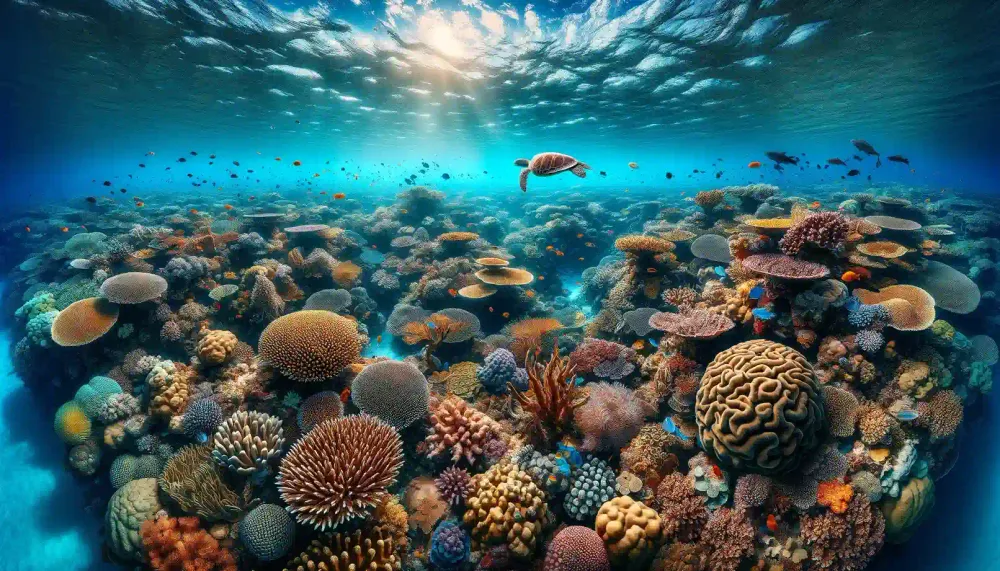
Every conscientious snorkeller and diver asks the same question before booking a Fiji trip, and it is the right question to ask: are the reefs still worth it? Not in the vague, reassuring way that the brochures answer it — those will tell you Fiji is the Soft Coral Capital of the World, which is accurate but not complete — but in the honest way, the way you ask a friend who has just come back from diving Rainbow Reef and wants to give you a straight answer rather than a sales pitch. The question matters because coral reefs globally are under severe pressure from rising ocean temperatures, and Fiji’s reefs are not immune. Bleaching events have affected parts of the archipelago. Some sites have degraded. The picture is real and it deserves an honest account.
The honest answer is: yes, Fiji’s best reefs remain among the finest on the planet. The soft coral forests of Rainbow Reef in the Somosomo Strait, the vast barrier system of the Great Astrolabe Reef off Kadavu, the protected waters of Namena Marine Reserve — these are reef experiences that have not lost their claim to world-class status, and a diver or snorkeller who visits them in 2025 will come away with the same feeling that gave Fiji its reputation in the first place. But the picture is genuinely uneven. The most-visited reefs, particularly those closest to the main resort islands in the inner Mamanucas, have suffered more than the remote outer reef systems, and the gap between the best and the worst Fijian reef experiences has widened over the past decade.
This article is an attempt to describe that picture clearly. Where Fiji’s reefs came from, what the bleaching events actually did, which sites are in excellent condition and which have struggled, what is being done to protect and restore them, and — practically — how to behave in the water so that your visit contributes to the solution rather than the problem. Knowing where to go and what to expect is more important than it used to be. The reefs that reward the extra effort to reach them remain extraordinary. That is worth knowing before you book.
Why Fiji’s Reefs Were Special
Fiji occupies an exceptional position in the geography of marine biodiversity. The archipelago sits on the southwestern fringe of the Coral Triangle — the roughly triangular expanse of tropical ocean bounded by the Philippines, Indonesia, and the Solomon Islands that functions as the global centre of marine life. The Coral Triangle contains the highest diversity of coral and reef fish on Earth, and Fiji, though technically outside its core boundaries, benefits from the species richness that radiates outward from this region through ocean currents and larval dispersal. The result is a reef ecosystem of extraordinary diversity: over 400 species of coral have been recorded in Fijian waters, a figure that places the country in the top tier of coral diversity globally.
What made Fiji genuinely exceptional, rather than simply very good, was its soft coral. Soft corals — the non-reef-building octocorals, the sea fans, sea whips, and the vivid tree-like formations that give Fijian reef walls their distinctive character — reach a density and diversity in Fijian waters that is unusual even within the Coral Triangle context. The Somosomo Strait between Taveuni and Vanua Levu, and in particular the stretch known as Rainbow Reef, has walls of soft coral in colours that have to be seen to be properly credited: intense reds, electric pinks, deep purples, and saturated oranges growing so thickly that the underlying hard coral structure is often invisible beneath them. The same extraordinary soft coral density occurs at Namena Marine Reserve and at several sites along the exposed outer walls of Bligh Water, the deep passage between Viti Levu and Vanua Levu. The title of Soft Coral Capital of the World was not a marketing invention. It was the observation of marine biologists and divers who had been to comparable destinations elsewhere and came back with nothing quite like it.
Fish diversity reflects the same abundance. Over 1,200 species of fish have been recorded in Fijian waters — sharks, rays, reef fish of every description, schooling pelagics, cleaning station residents, and a supporting cast of crustaceans, echinoderms, and invertebrates that turns a single dive into a two-hour catalogue of things you did not know existed. The reef shark populations of Fijian waters deserve particular mention. In 2014, the Fijian government declared the country’s entire exclusive economic zone — roughly 1.3 million square kilometres of ocean — a shark sanctuary, prohibiting all commercial shark fishing and the possession or sale of shark products. The effects of this policy are visible in the water: reef shark populations at healthy Fijian reef sites are dense and unafraid compared to heavily fished regions, and the shark diving at sites like Beqa Lagoon — where bull sharks and various reef shark species gather in extraordinary numbers — has become one of Fiji’s signature marine tourism experiences. A reef that supports healthy shark populations is a reef with an intact top of the food chain, and the sanctuary decision has protected that condition from commercial erosion.
The Bleaching Events — What Happened
Coral bleaching is a temperature stress response. Corals are animals that live in a symbiotic relationship with microscopic algae called zooxanthellae, which live within the coral’s tissues and produce up to 90 per cent of the coral’s energy through photosynthesis. When water temperatures rise above the coral’s tolerance threshold — typically by one to two degrees Celsius above the long-term maximum for a sustained period — the coral expels its zooxanthellae. Without them, the coral turns white, which is what bleaching looks like: the pale or bright white of coral tissue with no algae inside it. If water temperatures return to normal quickly enough, the coral can take up new zooxanthellae and recover. If the thermal stress persists, the coral starves and dies, leaving behind a pale grey skeleton that will eventually be overgrown by algae and lose its three-dimensional structure. Recovery of a complex coral reef from widespread mortality takes decades, not years.
Fiji has been affected by two significant bleaching events within the past decade. The global mass bleaching event of 2015–2016 — the third recorded global mass bleaching event, driven by a combination of record ocean temperatures and a strong El Niño cycle — affected parts of Fiji, with the Mamanuca Islands and some Coral Coast inshore sites experiencing significant coral stress and mortality. Some areas that were affected in 2016 have shown meaningful recovery over the subsequent years; others have not. The pattern of recovery depends on the severity of the initial bleaching, the frequency of subsequent thermal stress events, and the local conditions — water quality, fishing pressure, and physical disturbance — that either support or hinder coral recruitment and growth. A second warming event in 2020 caused additional bleaching across parts of Fiji, interrupting recovery at some sites that were beginning to rebuild.
The geographic pattern of bleaching impact is not uniform, and this is the most practically important thing to understand about Fiji’s reef condition in 2025. The reefs that have suffered most are the ones that combine three factors: proximity to the warming effects of shallow, enclosed water bodies; high visitor pressure; and exposure to land-based runoff from agricultural areas. These conditions describe, fairly precisely, the inner Mamanuca Islands and the inshore reef areas of the Coral Coast. The reefs that are in the best condition are those that are remote, deep-water influenced, and subject to low human impact — the outer wall systems of Rainbow Reef and the Great Astrolabe Reef are the clearest examples. The implication for visitors is straightforward: the effort required to reach Fiji’s best reefs has increased, because the best and worst reef experiences are further apart than they once were.
The Best Reefs — Still Extraordinary
Rainbow Reef, in the Somosomo Strait between Vanua Levu and Taveuni in Fiji’s north, is still among the world’s great dive destinations, and by a meaningful margin. The soft coral walls that earned it global recognition are largely intact and spectacular. This is a site where a diver who descends along the wall at a location called The Great White Wall — a vertical reef face covered in dense white soft coral that turns the entire wall ghostly in the right current and light conditions — will understand immediately why the description of Fiji as the Soft Coral Capital was not overstated. Beyond the White Wall, Rainbow Reef offers a variety of site types: bommies, channels, and shallow reef gardens that support the full range of species the Somosomo Strait is known for. The reef’s distance from the main visitor hubs of Nadi and the inner Mamanucas — requiring a flight or overnight ferry from Suva to reach Taveuni — has kept visitor numbers at a level the reef can absorb, and thermal stress in this section of the strait has been less severe than in the warmer, more enclosed southern reef systems.
The Great Astrolabe Reef off Kadavu, in Fiji’s Southern Division, is the fourth-largest barrier reef system in the world and arguably the least visited significant reef in the Pacific. Reaching Kadavu requires a light aircraft from Nadi or a ferry from Suva, and the island has very limited accommodation compared to the Mamanucas or Yasawas. This inaccessibility is the reef’s most effective protector. The Great Astrolabe is in excellent condition: hard coral cover is high, fish populations are dense, the shark sanctuary is fully effective here, and the combination of deep oceanic water on the outer walls and sheltered passages within the lagoon system creates the kind of habitat diversity that supports an exceptionally full reef community. For divers who are willing to commit to the journey, Kadavu is the most direct answer to the question of whether Fiji still has world-class reefs.
Namena Marine Reserve, in the Koro Sea between Viti Levu and Vanua Levu, is one of Fiji’s strictly protected marine conservation areas. Access is restricted, visitor numbers are carefully managed, and the combination of deep-water upwellings and no-take protection has produced reef health that demonstrates clearly what Fijian reefs look like when sustained human pressure is removed. Dive sites within Namena — including Tetons and the Mushroom sites in the northern lagoon — are among the most species-rich dives available in the country. The reserve is regularly cited by marine biologists working in Fiji as evidence that meaningful reef recovery and maintenance is achievable when protection is genuine rather than nominal.
Beyond these headline destinations, the outer reef sites of Beqa Lagoon, the Bligh Water passage sites, and several locations in the Yasawa Islands outer wall offer reef diving that is substantially better than anything available at the inner Mamanuca house reefs. The relationship between reef health and visitor access is, in Fiji as globally, essentially inverse: the further you go, the better the reef tends to be. This is not a counsel of despair — most visitors to Fiji can, with some planning, reach at least one of the sites described above — but it is a reason to factor reef access into your accommodation and activity choices rather than treating it as an afterthought.
The Most Affected Reefs
The inner Mamanuca Islands — the cluster of islands immediately accessible from Port Denarau that most visitors reach first — have the most variable reef quality in Fiji. The house reefs of some inner island resorts have experienced significant bleaching impacts and have coral cover that reflects the accumulated stress of the past decade. Some sites have recoverd meaningfully; others have not. The shallow, relatively enclosed water of the inner Mamanucas warms more quickly during thermal stress events than the deeper, more exposed outer reef systems, and the high volume of boat traffic, anchoring, and in-water visitors has added physical pressure on top of the thermal stress. A snorkeller who steps off the beach of an inner Mamanuca island resort and finds pale, broken coral in the shallows is encountering a real situation, not an aberration.
The Coral Coast’s inshore reef areas face a different combination of pressures. The fringing reef system along Viti Levu’s southern coast has been affected by both bleaching and land-based runoff from agricultural activity — in particular, the sugarcane growing areas of the Sigatoka Valley and surrounding coastal strip introduce elevated nutrient levels and sediment into the nearshore water, which stresses coral and promotes the algae growth that competes with recovering coral for space on the reef substrate. The Coral Coast outer reef — the barrier system several kilometres offshore — is in considerably better condition than the inshore fringing reef, and boat trips from Coral Coast resorts to the outer reef regularly encounter healthy coral and good marine life. The distinction between inshore and offshore reef quality on the Coral Coast is important and worth asking your resort activity staff about specifically.
The practical advice for visitors to either area: manage your expectations for inner-island house reefs and inshore fringing reef sites. Do not judge Fiji’s reefs on the basis of the first snorkel off the beach. Seek out boat trips to outer reef sites and ask your dive operator or activity centre specifically which sites are in the best current condition. Operators who work these waters regularly know exactly which sites have good coral cover and healthy fish populations, and most are happy to share that information with guests who ask directly. The gap between a disappointing house reef snorkel and a genuinely extraordinary outer reef dive is often a short boat ride and the willingness to ask the right questions.
What’s Being Done
Fiji’s Marine Protected Area network has expanded significantly over the past decade, and community-managed MPAs in particular have produced some of the most encouraging reef management outcomes in the Pacific. The model that has worked best is one in which local fishing communities establish their own no-take zones — known in Fijian tradition as tabu areas — in reef areas that they have a long-standing relationship with and economic stake in protecting. These traditional conservation mechanisms, repurposed for modern reef management, have in several documented cases produced measurable increases in fish biomass and coral health within a few years of establishment. The critical element is community ownership: when the people who depend on a reef for their livelihoods are the ones making decisions about its management, rather than having external rules imposed on them, the compliance and the results tend to be substantially better.
Coral restoration projects are operating at several sites in Fiji, run by a combination of NGOs and resort partners. Coral gardening — the technique of growing coral fragments on underwater wire structures or PVC “trees” until they reach transplantable size, and then relocating them to damaged reef areas — is a labour-intensive approach that works best as a complement to improved conditions rather than a substitute for them. A coral transplanted onto a reef that is still experiencing regular thermal stress will bleach along with the natural coral; transplanted onto a reef that is recovering and has reduced pressure, it contributes to the acceleration of natural recovery. Several Fijian resorts along the Coral Coast and in the Yasawa Islands have established their own coral nurseries, giving guests the option of participating in transplantation dives as a direct contribution to reef restoration.
At the regional level, Fiji is a participant in the Coral Triangle Initiative, the multilateral framework for reef conservation that coordinates science, policy, and management across the Indo-Pacific region. At the international level, the Fijian government has been an unusually vocal advocate on climate change — the 2017 COP23 climate conference was presided over by Fiji, giving the country a prominent platform to argue for the emissions reductions that are ultimately the only effective long-term protection for coral reef systems anywhere on the planet. Ocean warming — the fundamental driver of bleaching events — cannot be addressed by better reef management alone. Every measure described in this section buys time and reduces local pressure, but the long-term trajectory of reef health in Fiji, as globally, depends on whether global emissions trajectories change. This is not defeatism; it is an honest framing of the scale of the challenge alongside the genuine effectiveness of the local and regional work being done.
What Visitors Can Do
Use reef-safe sunscreen. Conventional sunscreens commonly contain oxybenzone and octinoxate, chemical UV filters that are toxic to coral at the concentrations found in heavily used reef areas. They disrupt coral reproduction, accelerate bleaching, and damage coral DNA. Reef-safe alternatives use mineral-based UV filters — zinc oxide or titanium dioxide — that do not carry these effects. Most Fiji resorts now require or strongly recommend reef-safe sunscreen; some sell it on-site. Alternatively, wearing a rash vest or lycra sun suit in the water eliminates the need for sunscreen on the torso entirely, which is the most effective approach. A rash vest also provides excellent sun protection for extended snorkelling sessions without any chemical input at all.
Do not touch the coral. Coral polyps are living animals, and physical contact — even a light touch — can damage or kill the polyp and create an entry point for infection. In practice, the main culprits are fins kicking against the reef rather than deliberate touching; maintaining good buoyancy control in the water and keeping your fins angled upward and away from the reef structure below you is the single most effective thing a diver can do to prevent physical damage. Snorkellers in shallow reef areas should be similarly aware of their fin positioning, particularly when pausing to observe something closely.
Do not anchor on reefs. If you are on a charter boat or private vessel, use mooring buoys where they exist, or anchor in sand clear of the coral structure. A dropped anchor on a coral reef can destroy decades of growth in a single instance of contact. Responsible charter operators will know where moorings are located and will anchor only in sand if no mooring is available.
Choose responsible operators. The quality gap between operators who take reef stewardship seriously and those who do not is large, and it shows in how they brief guests, how they respond to irresponsible behaviour in the water, and what equipment and practices they use. An operator who briefs guests thoroughly before every dive or snorkel session, uses mooring buoys rather than anchoring on reefs, and is willing to deny access to sites that are stressed or recovering is an operator worth choosing, worth recommending, and worth paying a small premium for. Asking an operator directly about their reef practices before booking is entirely reasonable and tends to produce an illuminating response.
Report what you see. The CoralWatch app, developed by the University of Queensland, allows divers and snorkellers to record reef condition observations using a standardised colour chart and upload them to a global database used by researchers monitoring reef health trends. Participating in CoralWatch turns every snorkel into a potential data point that contributes to the scientific record. It takes five minutes at the end of a dive and requires no specialist training beyond learning the simple colour-matching protocol.
Support reef restoration financially. Several Fiji-based coral restoration and reef conservation organisations welcome donations from visitors, and some offer the option of participating directly in coral gardening or transplantation dives for a fee that funds the programme. Contributing financially to an organisation doing effective reef work in Fiji is one of the most direct ways a visitor can turn the environmental cost of their travel into a net positive for the reef system they came to experience.
Should You Still Go?
Yes. The qualifications in this article should be read as navigation aids, not deterrents. Fiji’s best reefs — Rainbow Reef’s soft coral walls, the Great Astrolabe Reef’s barrier system, Namena Marine Reserve’s protected waters — remain among the finest reef experiences available to a diver anywhere in the world. These sites have not lost the qualities that earned Fiji its reputation, and a visitor who reaches them will come away with the understanding that the reputation was fully deserved.
The inner Mamanuca house reefs are variable, and it is worth managing expectations accordingly: some are in reasonable condition, some have suffered significant bleaching impacts, and none should be treated as a representative sample of Fijian reef quality. A disappointing snorkel at an inner resort should prompt a boat trip to an outer reef site, not a revision of the view that Fiji’s reefs are worth visiting.
There is also an argument to be made — and it is a genuine argument, not a rationalisation — that visiting Fijian reefs and spending money within reef-adjacent communities is itself a positive contribution to reef protection. The economic value of healthy reefs to local communities is the most powerful argument for protecting them from fishing pressure, development, and other locally manageable threats. A tourist who snorkels Namena or dives the Great Astrolabe and spends money in the process is providing a concrete demonstration that intact, living reef has economic value — a value that continues generating returns year after year rather than the single return of a harvested resource. Reef tourism, done responsibly, is one of the mechanisms that makes reef conservation a rational economic choice for the communities that live alongside these systems. Going to Fiji’s reefs and behaving carefully within them is not a compromise with your environmental conscience. It is, in a meaningful sense, part of the solution.
Final Thoughts
Fiji’s reefs have been tested by warming oceans, and the honest answer to the question of whether they have been affected is yes — in some areas significantly so. The global crisis affecting all coral reef systems has reached Fiji as it has reached every reef region on the planet, and the pattern of impact here reflects the same logic that governs reef health everywhere: outer, exposed, low-pressure sites are in better condition than inner, enclosed, high-pressure ones. Knowing this, and making travel choices that favour the better reef sites, is a straightforward way for a visitor to get the most out of a Fiji reef experience.
But the picture is not one of decline without qualification. The reef systems that have been well protected — by remote location, by strong community management, by the shark sanctuary and the marine protected area network — are in extraordinary condition. The restoration work being done by NGOs, communities, and resort partners is producing real results at individual sites. And the advocacy that Fiji has done at the international level on climate change represents a recognition, at the government level, that the fundamental driver of reef stress must be addressed at scale. Fiji’s reefs are worth visiting, worth protecting, and worth being honest about. That combination of clear-eyed assessment and genuine cause for optimism is the most accurate thing that can be said about them in 2025.
Frequently Asked Questions About Fiji’s Coral Reefs
Are Fiji’s coral reefs still healthy?
The answer depends significantly on which reefs you are asking about. The outer, less-visited reef systems — Rainbow Reef in the Somosomo Strait, the Great Astrolabe Reef off Kadavu, and Namena Marine Reserve — are in excellent condition and remain among the finest coral reef experiences in the world. The inner Mamanuca Islands and some Coral Coast inshore sites have experienced bleaching impacts and variable recovery; these reefs are more degraded than they were a decade ago, though some areas have shown meaningful recovery. The overall picture is uneven, and the gap between the best and worst Fijian reef sites is significant. Visiting the outer, better-protected sites requires more effort but rewards it generously.
Which is the best reef for diving in Fiji?
For soft coral diving, Rainbow Reef in the Somosomo Strait near Taveuni is the clear answer — its walls of vivid soft coral remain extraordinary and are largely unaffected by recent bleaching events. For barrier reef diving with exceptional coral cover, fish diversity, and large animal encounters, the Great Astrolabe Reef off Kadavu is Fiji’s premier destination. For marine reserve diving at a site demonstrating the full potential of protected reef systems, Namena Marine Reserve in the Koro Sea is outstanding. All three require more travel than the inner Mamanuca day-trip sites, but all three offer experiences that fully justify the effort.
Has coral bleaching affected Fiji?
Yes. Fiji experienced significant bleaching impacts during the global mass bleaching event of 2015–2016 and during a second warming event in 2020. The Mamanuca Islands and some Coral Coast inshore sites were the most affected areas. Some of the sites damaged in 2016 have shown recovery over the subsequent years; others have not recovered to their previous condition. The outer reef systems — Rainbow Reef, the Great Astrolabe, Namena — were less severely affected and are in significantly better condition than the more accessible inner reef sites. Bleaching remains a risk under ongoing ocean warming, and the frequency of bleaching events globally has increased. Fiji is not immune to this trend.
What is reef-safe sunscreen and do I need it in Fiji?
Reef-safe sunscreen uses mineral-based UV filters — zinc oxide or titanium dioxide — rather than the chemical filters (most commonly oxybenzone and octinoxate) found in conventional sunscreens. The chemical filters are toxic to coral at the concentrations found in heavily used reef areas, disrupting reproduction, accelerating bleaching, and damaging DNA. Most Fiji resorts now require or strongly recommend reef-safe alternatives, and some include it in their reef activity requirements. The most effective approach is to wear a rash vest or lycra sun suit in the water, eliminating the need for sunscreen on the torso entirely, and to use reef-safe mineral sunscreen for any exposed skin. This combination provides better sun protection and zero chemical input into the reef.
Can you help restore coral reefs in Fiji?
Yes, in several ways. A number of Fiji-based NGOs and resort conservation programmes run coral gardening and transplantation projects, and some welcome paying participants in transplantation dives that both fund and directly contribute to restoration work. Financial donations to reef conservation organisations operating in Fiji are another direct option. Using the CoralWatch app to record reef condition observations during snorkelling and diving sessions contributes useful scientific data to researchers monitoring reef health trends. Choosing operators who actively support reef conservation — and being willing to pay a modest premium for their services — keeps economically viable the operators who are doing the right things. Any combination of these approaches allows a visitor to leave Fiji’s reefs in better condition than they found them, rather than simply hoping for the best.
By: Sarika Nand