Published
- 22 min read
10 Insta-Worthy Spots in Fiji
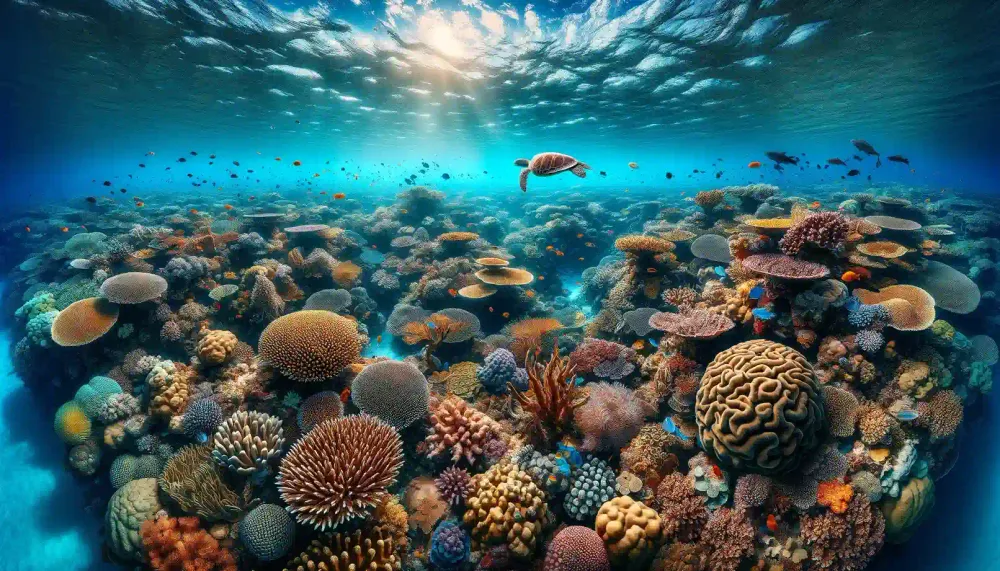
The turquoise water genuinely does look like that. It’s one of the things that surprises first-time visitors to Fiji who arrive half-expecting the photos to have been colour-graded into something no actual ocean could match — and then step off the boat at a Mamanuca island and find that the water is exactly that shade of impossible blue-green. The volcanic geology, the shallow reef platforms, and the particular angle of the Pacific sun combine to produce colours that look post-processed and simply are not. That part of the reputation is entirely deserved.
What the standard Fiji photo library misses is everything outside the resort pool. Fiji has more photogenic geography per square kilometre than most countries on earth, and much of it — the volcanic highlands, the limestone caves, the lush rainforest waterfalls, the remaining traditional village, the coral-draped dive walls — isn’t visible from a sun lounger on Denarau. The best images come from knowing where to go, when the light works, and how to actually get there. Some of these locations are day trips from Nadi. Others require a domestic flight, a ferry, or a full day’s drive. All of them are worth it.
This guide covers ten spots that are genuinely, photographically extraordinary — not because they have a good angle or two, but because each location has a visual character that is difficult to replicate anywhere else. For each one you’ll find what makes it special, how to get there, when the light is best, and any practical notes that will save you time or frustration. None of this is vague: if a location shoots best at 7am or requires a 90-minute hike, that’s what the guide says.
10 Insta-worthy spots in Fiji:
- Overwater Bure at Likuliku Lagoon Resort, Malolo Island
- Sri Siva Subramaniya Temple, Nadi
- The Blue Lagoon, Nanuya Lailai Island, Yasawa Islands
- Tavoro Waterfalls, Bouma National Heritage Park, Taveuni
- Sigatoka Sand Dunes National Park
- Garden of the Sleeping Giant, Sabeto Valley
- Cloud 9 Floating Platform, Mamanuca Islands
- Sawa-i-Lau Limestone Cave, Yasawa Islands
- Navala Village, Ba Highlands
- Rainbow Reef and The Great White Wall, Taveuni
1. Overwater Bure at Likuliku Lagoon Resort, Malolo Island
Likuliku Lagoon Resort is the most photographed overwater accommodation in Fiji, and the reason is straightforward: the bures are extraordinarily well-designed, the water directly beneath them is genuinely transparent, and the surrounding lagoon — enclosed within Malolo Island’s protective reef — holds that vivid turquoise colour from first light through to mid-morning. The images that circulate widely online of a timber deck suspended over clear shallow water with a thatched roof above and absolutely nothing else in frame were almost certainly taken here.
What makes it visually special beyond the bure architecture is the lagoon setting. Malolo sits within the Mamanuca group, and the protected water between the island and its fringing reef is consistently calm, clear, and undisturbed by swell. At dawn, when there’s no boat traffic and the light is low and warm from the east, the reflection off the lagoon is something you don’t get at midday — the surface takes on an almost mirror quality, and the colours in the water shift between green and deep blue as the sun climbs.
You do not need to be a guest to visit Likuliku or Malolo Island. South Sea Cruises runs daily services from Port Denarau to the Mamanuca Islands, with Malolo accessible in approximately 45 minutes. Day-trippers typically access adjacent properties and beach areas; the resort itself is private to guests, but the island’s beaches and surrounding water are the context for any shot of the overwater bures from a kayak or from the beach. For the actual deck-over-water compositions, staying is obviously required — the bures book months in advance and prices are premium. Photography note: arrive on the first ferry for the morning light. By 10am the sun is high enough to flatten the water’s colour. A wide-angle lens captures the full lagoon context; a telephoto from the beach isolates the bures against the water.
2. Sri Siva Subramaniya Temple, Nadi
The gopuram — the tiered ceremonial tower — of the Sri Siva Subramaniya Swami Temple at the southern end of Nadi town is one of the most photographically saturated structures in the entire Pacific. It rises nearly 30 metres, faced with hand-painted figures rendered in reds, blues, yellows, and greens stacked in receding tiers against a sky that, on a clear Nadi morning, is an uncomplicated sharp blue. The contrast between the painted surface and the tropical sky is the shot, and it is almost impossible to take a bad one.
What elevates it beyond a straightforward architecture photograph is the context. This is the largest Hindu temple in the Southern Hemisphere, and it is a fully active place of worship for Fiji’s Indo-Fijian community — descendants of indentured labourers brought from southern India in the late 19th century. The artisans who painted the gopuram came specifically from Tamil Nadu for the work, and the iconography traces directly back to the Dravidian temple traditions of southern India. Knowing that makes the image mean something different.
The temple is in the centre of Nadi town, easily reached on foot from the main market. Entry is free. Dress code is strict: shoulders and knees must be covered, and shoes are removed at the entrance. Photography is permitted in the outer areas and grounds; do not photograph inside the sanctum, and always ask before pointing a lens at worshippers. The best light is between 7am and 9am, when the sun is low and coming from the east, illuminating the gopuram’s eastern face fully. By mid-morning the light becomes harsh and the shadows between the painted tiers lose their definition. Midday photographs tend to flatten the colour. If you can only visit once, go early.
3. The Blue Lagoon, Nanuya Lailai Island, Yasawa Islands
The Yasawa Islands extend roughly 80 kilometres northwest of Viti Levu in a chain of volcanic ridges, and the water between them — protected from open ocean swell by the island mass — is some of the most photographed in Fiji. Nanuya Lailai, partway up the chain, is home to the location used for the 1980 film The Blue Lagoon: a crescent of white sand enclosed on three sides by low green hills, with water that in the right conditions achieves a colour gradient from pale aquamarine at the shore to a saturated cobalt further out.
What makes it a genuinely extraordinary photographic location is the enclosure. Most beach photography suffers from too much open horizon — the landscape has no depth. Nanuya Lailai’s lagoon is bounded by hills on three sides, which gives wide-angle shots a frame and a sense of scale. The white sand is very fine and very pale, which increases the apparent brightness of the water above it. In the afternoon, when the sun moves west and the light hits the beach from behind the hills at an oblique angle, the sand glows and the water colours deepen.
Getting there requires a commitment. The Yasawa Flyer — the main passenger ferry — departs Port Denarau daily and takes approximately five to six hours to reach Nanuya Lailai depending on stops. Alternatively, seaplane transfers are available from Nadi and reach the island in around 30 minutes at significantly higher cost. Most people visiting the Blue Lagoon area stay at one of the small resorts or backpacker bungalows on Nanuya Lailai or adjacent Nanuya Island; a day trip is logistically complicated. Plan for at least two nights. Afternoon light, from roughly 3pm onwards, is the most flattering for the beach and lagoon. Overcast mornings can actually work well for the water colour — the cloud diffuses the light and reduces glare.
4. Tavoro Waterfalls, Bouma National Heritage Park, Taveuni
Taveuni is the Garden Island — more of its land area is protected forest than cleared ground, and the interior is a series of volcanic ridges covered in dense, multi-layered rainforest that receives significant rainfall and stays intensely green year-round. The Tavoro Waterfalls in Bouma National Heritage Park are three separate tiers of falls dropping through this forest, each with a natural pool at the base, and the photographic quality comes from the contrast: silver water against saturated green canopy, the falls framed by heliconia and tree fern, the light filtering in broken shafts through the forest cover.
The first falls are accessible to anyone in reasonable health — a ten-minute walk on a maintained track from the park entrance, and the result is a waterfall substantial enough to be genuinely impressive. The second tier requires a 45-minute uphill walk; fewer people make it there, and the forest around it is denser and less disturbed. The third tier, at roughly 90 minutes of walking each way from the first, is the most dramatic — higher, more powerful, and set in forest that feels genuinely remote. All three are swimmable.
Photography note: overcast conditions are preferable for waterfall photography. Dappled sunlight creates harsh contrast that bleeds highlight detail in the white water — flat cloud cover produces even, manageable light that reveals the water texture properly. Bouma receives enough rainfall that cloud cover is common and not a disappointment. A wide-angle lens emphasises the height of the falls relative to the forest; a slower shutter speed (1/15 to 1/30 second on a tripod) blurs the water into the classic silky texture. Taveuni is accessed by domestic flight with Fiji Link from Nadi (approximately one hour) or by overnight ferry from Suva via Vanua Levu. Bouma is on the eastern coast, about 20 kilometres from Matei airport. Entry is around FJ$15 per adult.
5. Sigatoka Sand Dunes National Park
The Sigatoka Sand Dunes are a graphic landscape anomaly — enormous coastal dunes meeting the ocean at the mouth of the Sigatoka River, the result of thousands of years of river sediment being deposited and shaped by wind and wave into formations that look, at golden hour, more like a Namibian coastal desert than a tropical Pacific island. The visual appeal comes from simplicity: clean curves of pale sand, strong shadows from the dune faces, the ocean as a flat dark strip beyond.
This is not subtle landscape photography — it’s high-contrast, almost abstract, and the quality of the image is determined almost entirely by the quality of the light. Early morning (first light, around 6–6.30am in the dry season) and late afternoon (two hours before sunset) produce the long, raking shadows across the dune faces that give the landscape its depth and graphic character. Midday photographs are essentially useless — flat light on pale sand produces visual nothing. The walking track from the small visitor centre allows you to climb to the dune crests, where the view is ocean on one side and the broad Sigatoka Valley on the other.
The park is about 45 minutes from Nadi along Queens Road, and entry is FJ$10 per person. It opens at 8am. For the best morning light you want to be on the dunes before 8am, which means the park opening time is a minor constraint — call ahead or check whether early entry is possible, as some operators arrive with groups before the formal opening. The dunes are active (they move and shift over time), and the sand is soft enough that climbing is genuinely physical work. Wear closed shoes rather than thongs. Bring water. The beach at the base of the dunes is wild and surf-exposed — check conditions before swimming, as the current at the river mouth can be strong.
6. Garden of the Sleeping Giant, Sabeto Valley
The signature image from the Garden of the Sleeping Giant — the orchid garden established on Raymond Burr’s property in the Sabeto Valley outside Nadi — is not, in fact, of orchids. It’s of the teal-painted wooden bridge over the lily pond: the colour of the bridge paint against the green of the lily pads and the reflections in the still water has a quality that photographs well in virtually any condition. It’s one of those compositions that looks considered but requires minimal effort to frame.
The gardens themselves, across roughly 20 hectares of terraced hillside at the foot of the Sabeto mountain ridge, are photogenic in a broader and more patient way. The orchid houses in the morning light are genuinely beautiful — the morning sun comes through the slatted roof of the covered walkways in strips, and the orchids are dense and varied enough that close-up macro photography is rewarding. The lily ponds, the shaded forest walks, and the open lawns are all well-maintained and easy to compose. The mountain ridge rising directly behind the garden creates a strong backdrop for wider shots.
Go early — the garden opens at 9am, and arriving at opening gives you the morning light and, more importantly, the absence of tour groups. By mid-morning the place fills with organised tours from Nadi and Denarau, and the bridge becomes difficult to shoot without strangers in frame. The garden is about 30 kilometres north of Nadi town, most easily reached by taxi, rental car, or as part of a half-day tour that typically combines it with the Sabeto Mud Pools. Entry is approximately FJ$25 per adult. Bring a macro lens or use your phone’s portrait mode for the orchid close-ups — the detail in the flowers repays the attention.
7. Cloud 9 Floating Platform, Mamanuca Islands
Cloud 9 is a multi-storey floating platform anchored in open water in the Mamanuca Islands group — a bar, restaurant, and leisure deck in the middle of the ocean, painted in a coral-red that is as saturated and vivid as anything in Fiji’s landscape. It is, frankly, designed to be photographed. The aerial drone shot — red platform, white timber decks, and bar umbrellas against an expanse of turquoise water extending to the horizon in every direction — is one of the most striking images in Fiji tourism, and it is genuinely an accurate representation of what the place looks like.
From ground level (which is to say, water level), the photography is different but equally strong. The red against the blue at midday, when the sun is high and the water colour is at its most saturated, creates a primary-colour contrast that works well from any angle. Sunset light is the other option: the red of the structure catches the warm orange-pink of the late sky, and the water transitions from turquoise to a deeper blue-grey that produces a completely different mood from the midday version.
Cloud 9 is accessible as a day trip from Port Denarau with South Sea Cruises — the journey takes approximately 45 minutes and day-trip packages typically include a food and beverage credit. Private boat charters are also available from Denarau Marina if you want to control your timing precisely, which matters for photography. Drone flying over the platform requires permission from the operators; ask in advance rather than assuming. Midday is best for the water-colour shots. Arrive at the platform by 11am to get the platform photographs before other guests settle in and fill the frame.
8. Sawa-i-Lau Limestone Cave, Yasawa Islands
Sawa-i-Lau is a limestone cave system on the island of the same name near the northern end of the Yasawa chain, and the outer chamber contains what is arguably the most dramatic natural interior light in Fiji. The chamber is large — perhaps 20 metres across and 15 metres high — and it opens at the top to the sky through a series of gaps in the limestone ceiling. The turquoise water of the flooded cave floor reflects the light back upward, the walls glow with the bounced illumination, and the shafts of direct sunlight cutting through the ceiling gaps move across the water surface as the sun tracks overhead. It looks, and photographs, as though the cave is lit from within.
The practical reality of accessing the inner chamber involves swimming through an underwater passage — roughly five metres in length — that connects the outer chamber to a second, darker inner space. This requires confidence in the water and the ability to swim underwater for a short distance. The photographic opportunity is in the outer chamber, not the inner one; the inner chamber has minimal natural light. The outer chamber is accessible to any swimmer who can manage the entry point (which involves a short swim from the boat).
Getting to Sawa-i-Lau means getting to the Yasawa Islands — the Yasawa Flyer from Port Denarau, then a local boat transfer from whichever island you’re staying on (Nacula and Tavewa are nearby). Most visitors to Sawa-i-Lau are staying at backpacker resorts on Nacula Island; day trips to the cave are organised through the local resorts. The cave is accessible roughly between 10am and 2pm when the sun angle sends light through the ceiling gaps; outside these hours the interior is significantly darker and less dramatic. A waterproof camera or housing is necessary — the entry involves getting wet. Shoot upward toward the ceiling gaps to capture the light shafts and the limestone texture together.
9. Navala Village, Ba Highlands
Navala is the only fully thatched village remaining in Fiji, and the aerial view — around 200 traditional bures arranged in careful rows on a hillside above a bend in the Ba River, surrounded by volcanic green hills — is one of those images that looks implausible from above and deeply moving from the ground. The village sits in a wide valley about an hour’s drive inland from the town of Ba on Viti Levu’s northern coast, and the approach road climbs steadily through cane farms into quieter, older country.
From the ridge above the village, looking down at the rows of thatched roofs, you are looking at an architectural tradition that in most of Fiji has been replaced by corrugated iron. Navala has maintained it — through community commitment and, increasingly, a recognition that the village’s visual integrity is itself a form of cultural heritage. Drone photography from above the valley, with the village rows visible against the green hills and the river below, is spectacular; this is one location where an aerial perspective genuinely reveals something that the ground cannot. Get permission from the village headman before flying any drone — this is not optional, and ignoring it is a significant discourtesy.
Ground-level photography requires care and courtesy. Portrait photographs of community members require explicit individual permission; do not assume that being on a guided visit means open licence. The appropriate protocol for any visit to Navala is to arrive with a guide who has an established relationship with the village, bring a sevusevu (yaqona root as a formal offering to the headman), and follow the headman’s lead on what is and is not appropriate. Several tour operators run Navala day trips from Nadi — the drive is approximately two hours each way. These tours are worth their cost for the access and context they provide. The light in the valley is best in the morning and again in the late afternoon when the hills behind the village are lit from the side; midday light is flat and unflattering on the thatch.
10. Rainbow Reef and The Great White Wall, Taveuni
Everything else on this list is accessible to a non-diver with a camera. This one is not. Rainbow Reef, off the southern coast of Taveuni in the Somosomo Strait, is a world-class dive site that can only be experienced — and photographed — underwater by certified divers. The Great White Wall, its most famous formation, is a sheer coral wall dropping more than 30 metres that is covered from top to base in white soft corals (Dendronephthya species) that bloom and extend in strong current, creating a surface that looks, in wide-angle dive photography, like a vertical snowfield in the ocean. The visibility in the Somosomo Strait is consistently excellent, often 20–30 metres, which allows full-frame shots of the wall’s scale.
The practical photography challenge is the current. The Great White Wall is best dived on a rising tide when the current is flowing in from the ocean and the soft corals are fully extended and feeding. At slack tide or on an outgoing current the polyps retract and the wall loses much of its visual impact. Dive operators based on Taveuni — including Aquaventure Fiji and Paradise Taveuni — know the tidal conditions and schedule wall dives accordingly; book the morning dive slot and let the operator judge the tide. A wide-angle lens is essential for capturing the full scale of the wall and the ambient blue water above it; a strobe or video light restores the colour in the corals that the water depth absorbs.
Rainbow Reef also includes the White Wall’s more colourful companion sites — coral gardens in shallow water with exceptional fish density and colour variety that require no specialist photography equipment. For underwater photography specifically, a housed mirrorless camera or a decent compact housing with a wide-angle wet lens is the practical minimum. Taveuni is reached by domestic flight from Nadi (Fiji Link, approximately one hour) or by overnight ferry via Vanua Levu. Dive operators are concentrated around the Matei area and can arrange everything from equipment hire to multiple-dive itineraries.
Final Thoughts
These ten locations span Fiji’s full geographic range — from Nadi’s town centre to the remote northern Yasawas, from the Coral Coast to the Garden Island 200 kilometres to the northeast. That spread is the honest picture of what Fiji’s most photogenic places actually look like on a map. They are not all conveniently close together, and pretending otherwise would be a disservice to anyone planning a trip around them. Some require a domestic flight, some a multi-day ferry journey, and one requires scuba certification. The logistics are real.
What they share, beyond their visual character, is that they repay genuine engagement. The Sri Siva Subramaniya Temple is more than a coloured tower to point a lens at; understanding its place in Fiji’s Indo-Fijian community changes what you’re looking at. Navala Village is more than an aerial drone shot of thatched roofs; it’s a community that has made a collective choice to maintain a way of life under genuine economic pressure, and the protocol of the sevusevu visit reflects that. The Great White Wall is extraordinary underwater photography, but it’s also a healthy, functioning ecosystem that has survived because the Somosomo Strait’s strong currents have limited coastal development. Knowing these things doesn’t make the photographs worse — it makes them better, because you’re recording something you understand rather than something you happened to stand in front of.
Frequently Asked Questions
Do you need specialist photography equipment for these locations?
For most locations on this list, a modern smartphone with a competent camera is adequate — the Sleeping Giant garden, the Sri Siva Subramaniya Temple, the Sigatoka Sand Dunes, and Cloud 9 all photograph well on a phone. A drone produces genuinely better results at Navala Village and Cloud 9, but is optional elsewhere. The exception is the Great White Wall at Rainbow Reef, where underwater photography requires a waterproof housing, ideally a wide-angle wet lens, and ideally a strobe or video light. Sawa-i-Lau cave requires waterproof protection for any camera you bring.
Is a drone legal to fly in Fiji?
Drone flying in Fiji requires a permit from the Civil Aviation Authority of Fiji (CAAF). Tourist drone permits are available and the process, while somewhat bureaucratic, is manageable — allow several weeks before your trip to apply online. Flying without a permit risks confiscation and fines. Even with a valid permit, flying over private resorts, over villages without explicit local permission, and within restricted airspace near airports is prohibited. Always ask permission from landowners and community leaders before flying over any inhabited area.
What is the best time of year to visit Fiji for photography?
The dry season from May to October offers the most consistent conditions for outdoor photography: lower humidity, cleaner air with better visibility, and a higher proportion of clear days with the sharp blue skies that contrast well with temple architecture and white sand. The wet season (November to April) brings more cloud and rain, but also more dramatic light — storm light before and after tropical downpours can be extraordinary — and the waterfalls and forest landscapes are at their lushest and most saturated. Underwater visibility at Rainbow Reef and in the Yasawa lagoons tends to be excellent year-round. The honest answer is that Fiji photographs well in both seasons, just differently.
How far in advance should you book the Likuliku Lagoon overwater bures?
The overwater bures at Likuliku Lagoon Resort book out several months in advance, particularly for peak season travel (June to August and the December holiday period). If staying in the overwater bures is a specific goal, booking six months or more ahead is sensible. That said, visiting Malolo Island without staying at Likuliku is entirely feasible — South Sea Cruises day trips to the Mamanuca Islands are bookable with much shorter lead times, and the island itself is photogenic from any vantage point on the water.
Can you visit all ten locations in a two-week trip?
Realistically, yes — but it requires treating the trip as a photography-focused itinerary rather than a single-resort holiday. A practical approach: spend three to four days in the Nadi area (temple, Sleeping Giant, Sigatoka Dunes), book one to two nights on Malolo Island or a nearby Mamanuca resort (Likuliku Lagoon, Cloud 9), take the Yasawa Flyer up the chain for three to four nights covering Nanuya Lailai and Sawa-i-Lau, fly to Taveuni for three to four nights (Tavoro Waterfalls, Rainbow Reef), and factor in the Ba Highlands day trip to Navala from Nadi either at the start or end. It’s genuinely achievable, though the Taveuni portion requires coordinating domestic flights and dive bookings in advance.
By: Sarika Nand