Published
- 19 min read
Turtle Island: Fiji's Most Exclusive Private Island Resort
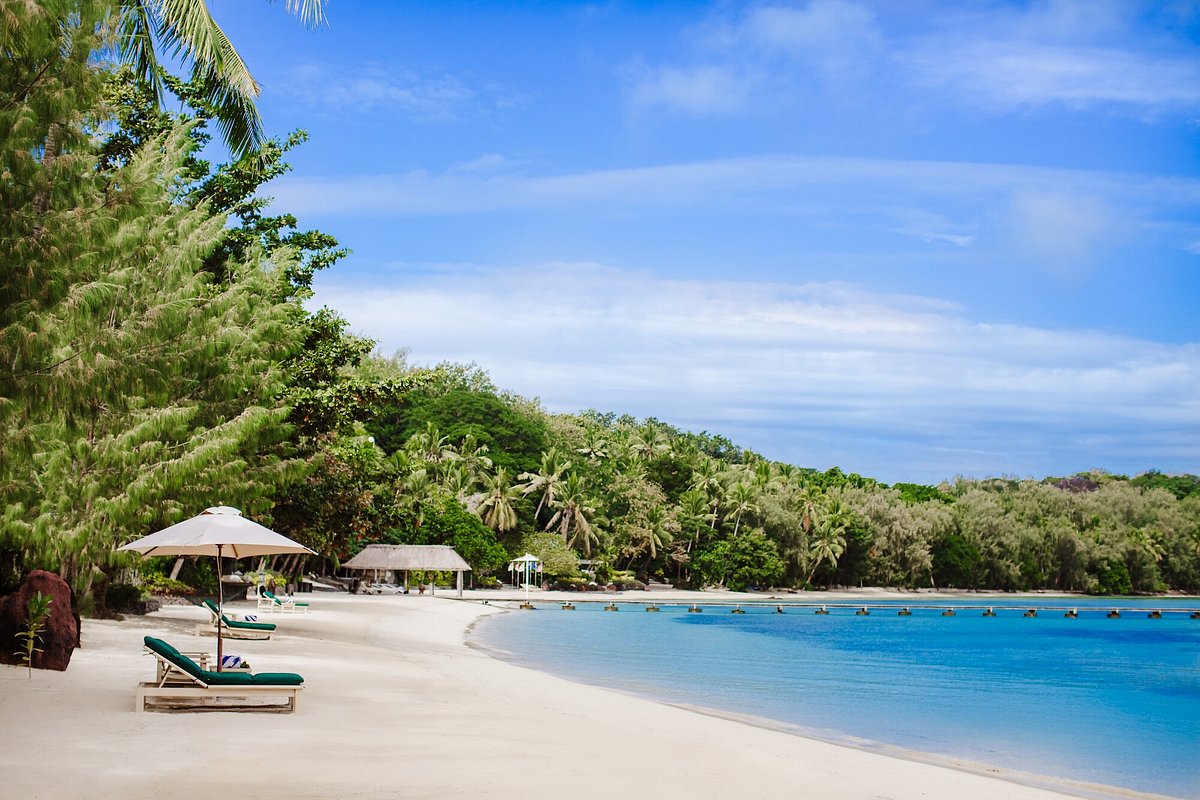
There are resorts that call themselves exclusive and then there is Turtle Island. Situated on Nanuya Levu in the Yasawa Islands, this 500-acre private island accepts a maximum of 14 couples at any one time. There are no day visitors, no conference groups, no outsiders of any kind. While you are on the island, it belongs to you and the other guests — and to the nearly 100 Fijian staff who live there, care for it, and treat every arriving guest as part of an extended family.
The resort carries a 4.8 out of 5 rating across 640 TripAdvisor reviews — driven not by room categories or pillow menus, but by people. Bill, Mama Nina, Philip the diving instructor, a staff member named Kip Smiling. Guests return. Some come back every year.
This is not a resort that competes on square footage or infinity pools. It competes on something harder to manufacture: genuine human connection at a scale that almost no other property in Fiji — or anywhere — attempts to replicate.
Fourteen Bures, Twelve Beaches
The arithmetic at Turtle Island is worth sitting with for a moment. The entire island has 14 bures. Each bure accommodates one couple (or a solo traveller). Maximum capacity across the whole property: 28 people. Against that, the resort employs between 88 and 100 staff at any given time. During one recent stay with just seven couples on the island, a guest counted 88 staff members. That works out to roughly six or seven staff for every single couple — a ratio almost unheard of anywhere in the world, let alone in Fiji.
The 12 private beaches are distributed in a similar spirit. Each couple is assigned their own beach for the duration of their stay, with a few additional shared beaches available for group activities. Your beach will be set up for you each day: chairs, towels, shade, whatever you asked for. There will be no other guests there unless you invite them.
This setup creates a particular kind of freedom. You can spend an entire day on your private beach, watching the tide change and reading, and no one will appear. You can also walk over to the main beach and join the other guests whenever you feel like company. The island offers genuine solitude and genuine community within the same day — one of the distinctive qualities of Turtle Island.
Getting to Turtle Island
Turtle Island is reached by seaplane from Nadi. The flight takes approximately 30 minutes and covers the length of the Yasawa chain, giving you a first look at the islands from above — the coral shelves, the vivid blues of the shallows, the dark green of the island interiors. The seaplane lands on the water alongside the island’s jetty.
The arrival is less about the flight itself and more about what happens when the plane stops. Staff gather at the jetty to sing. This is not a brief welcome; it is a full performance, led with obvious joy rather than obligation. Several guests have written that this moment alone made them emotional before they had even set down their bags.
From the jetty you are walked to your bure, introduced to your Bure Mama, and shown around. No check-in desk, no paperwork, no key cards. The island runs on a different set of logistics.
The US toll-free booking number is +1 800-255-4347. There is no published nightly rate because pricing is handled through direct enquiry, but guests and travel industry sources consistently place the cost well above $1,000 per night per couple, with most stays running five to seven nights. The resort is all-inclusive: all meals, all drinks, all activities, and all transfers are included in the price.
The Bure Mama: Your Personal Concierge
The Bure Mama system is one of the most distinctive features of the Turtle Island experience, and it is worth explaining in detail because nothing quite like it exists elsewhere in Fiji.
Each of the 14 couples is assigned a single staff member — their Bure Mama — who is responsible for that couple’s entire stay. This person is not a general concierge fielding requests from fifty rooms. They have one couple. You.
The Bure Mama knows your dietary preferences, your activity interests, whether you prefer coffee or tea in the morning, and what time you like to wake up. She coordinates your beach setup each day, arranges your activity bookings, communicates your preferences to the kitchen, and serves as your main point of contact for anything you need. If you want a midnight snack, a different pillow configuration, or a last-minute fishing trip added to tomorrow’s schedule, you tell your Bure Mama.
Mama Nina and Mama Taru are among the Bure Mamas who define what the system delivers at its best. Susan Carleton, who stayed in November 2025, wrote: “We can’t wait to be back. We have already booked our return for Family Time in December 2026. Can’t wait to see our Mama Nina.” Another guest, writing about Mama Taru: “She was never intrusive but we knew she was always there for us, if that makes any sense.”
That last line captures the quality the Bure Mama system achieves at its best: attentiveness without presence, care without pressure.
Accommodation: The 14 Bures
The bures at Turtle Island are spacious, traditionally styled structures built with Fijian craftsmanship — thatch roofing, natural materials, wide verandahs. Each bure sits close to the water, with direct access to the island’s beaches. Interiors include a separate living area, a large bathroom with walk-in shower, air conditioning, a minibar stocked to your prior preferences, an electric kettle, and a coffee press for morning use on the verandah.
Several bures include a private hot tub — worth using daily. Mornings develop their own rhythm: French press coffee on the beach below your bure before walking to the shared breakfast table to join the other couples.
The private beach attached to your bure is set up by staff each morning. This is not a lounger placed on a shared stretch of sand; it is a genuinely separate beach that is yours alone. In some cases these are small, sheltered coves. In others they open onto longer stretches of white sand. Either way, the setup arrives before you do.
Minibar preferences are collected in advance through a questionnaire, so your fridge contains what you actually drink. Room service is available, though most guests end up spending very little time in the bure beyond sleeping — the island draws you out.
The Communal Dinner Table
Each evening, all guests on the island dine together at a single communal table. This is one of Turtle Island’s most discussed features, and reactions to it split in interesting ways.
For many guests, the communal dinner becomes the highlight of the trip. John D., who honeymooned on the island in late 2025, described the table as a place “to share stories of life and island exploits” and wrote warmly about meeting guests from around the world. A couple who returned for their 14th anniversary wrote that “the conversations with other guests at the communal dinners were fun” and described mingling during evening cocktail hours as part of what made the experience feel complete.
The logic of the communal table is that with only 14 couples on a private island, strangers tend not to stay strangers for long. By the third evening, most guests have enough shared experiences — the same beach, the same kava ceremonies, the same sunrise horseback ride — that dinner conversation flows easily.
It is worth being transparent, however, that this arrangement is unusual for a resort at this price point, and not everyone arrives prepared for it. If you and your partner are seeking seven completely private dinners with no other guests present, that is not what Turtle Island is designed to offer. The island is built around a particular philosophy: that genuine community — between guests, between guests and staff, between visitors and Fijian culture — is part of the luxury. The communal table is central to that philosophy.
The food itself comes largely from the island. More on that below.
Horseback Riding at Sunrise
Of all the experiences at Turtle Island, the sunrise horseback ride along Long Beach is the one guests remember most.
You wake before dawn, before most of the island is awake, and your Bure Mama has arranged for horses to be ready. The ride takes you along the length of Long Beach as the light comes up over the Yasawa chain. The beach is wide and flat, the water running alongside it in the early blues and golds of morning. The horses move at a walk or a canter depending on what you are comfortable with, guided by staff members who know the terrain and the animals.
Frances K., describing her second visit in June 2025: “Whether we were horseback riding along Long Beach during sunrise, or fishing in the Blue Lagoon… we were fully present and immersed in beauty, culture, community and relaxation.”
Kevin J., who returned after 14 years for a 14-night anniversary stay, listed “sunrise and sunset horseback riding” among the experiences that made him cry from joy. Philip is the guide guests remember for the horses, and is particularly valued during Family Time.
For guests not experienced with horses, the staff work at your pace. For those who ride regularly, the terrain offers more. Either way, the light on Long Beach at that hour is the kind of thing that ends up in the photographs you actually keep.
Activities Included
Everything is included. There is no activities desk charging for upgrades, no resort credits to track. The full range of activities on offer:
Water:
- Scuba diving (Philip is frequently named as the diving guide)
- Snorkeling in the Blue Lagoon — the same bay where parts of the 1980 film The Blue Lagoon were filmed
- Line fishing and deep-sea fishing
- Sunset cruise
- Canoeing and kayaking
- Windsurfing
- Boating
Land:
- Horseback riding (sunrise and sunset)
- Archery on the beach
- Hiking the island’s interior
- Village visit to the local Fijian village on a neighbouring island
- Bicycling
Cultural and social:
- Nightly kava ceremony with staff
- Children’s choir visit from the neighbouring village (when children are on the island)
- Clam digging
- Crab hunting
- Communal dinners
Wellness:
- Full spa menu: couples massage, body wraps, facials, foot massage, manicure and pedicure
- Yoga classes
Other:
- Chapel / shrine (weddings and vow renewals are popular at Turtle Island)
- Candlelit dinners on private beaches (arranged through your Bure Mama)
- Picnics on your private beach
One guest in a November 2025 review listed catching a white snapper during a line fishing session and having it prepared for lunch the same day. That flexibility — telling the kitchen what you caught, having it cooked to your specification — is consistent with how the rest of the activities connect back to the food and daily rhythms of the island.
The Food: Grown on the Island
Turtle Island takes its food sourcing seriously. Approximately 95% of the food served to guests is procured on the island itself. The resort maintains vegetable and fruit gardens, fruit trees, root crops, and livestock including chickens, cows, and pigs — all cared for and harvested on-site.
Beautiful gardens, fruit trees, root crops, chickens, cows, and pigs on the island are cared for and harvested for guests. Meals are made fresh daily and to preference. For even picky eaters, the kitchen delivers consistently — a genuine work of art from chefs who know their ingredients intimately.
The kitchen is not running a fixed set menu. Dietary preferences are collected in advance and respected throughout the stay. Meals shift daily based on what is available from the gardens and what was caught that morning. Breakfast is served communally at a shared table; lunches can be taken on your private beach as a picnic or at the main dining area; dinner is the communal table each evening.
Beverages, including wine and champagne, are fully included. The minibar in your bure is stocked with your requested items. The bar stays open, and the kava ceremonies in the evenings often continue late into the night with staff singing alongside guests.
Family Time at Turtle Island
For most of the year, Turtle Island is an adults-only island. Children are not accommodated outside of a designated period known as Family Time, which runs during the Christmas and New Year season — typically late December through January.
During Family Time, the island adapts significantly. Serious Bob coordinates a full schedule of children’s activities including crab hunts, clam digging, sandcastle building, horseback riding, soccer, and other beach games. Each child is assigned a dedicated companion called a Bula Buddy. Qerry and Saula are among the named Bula Buddies frequently mentioned by visiting families; one parent noted that his four-year-old son became so attached to his Bula Buddy Qerry that he requested to ride a horse with Qerry rather than with his father on a trip to the mountain top.
Brett N., writing about a Christmas 2025 stay with his four-year-old: “Turtle Island does a fantastic job of setting up Family Time. We enjoyed a nice balance of being together as a family, and enjoying communal dinners and kava where we became friends with other guests while allowing our 4-year-old son to thrive at the Family Village.”
The family experience during Family Time is thoughtfully constructed. The communal dinner and kava ceremonies continue for adults in the evenings. Activities for children run in parallel, with Bula Buddies available throughout so that parents can also access adult activities and beach time during the day.
The Christmas morning celebration at Turtle Island involves Santa arriving on horseback — a consistent tradition that families remember vividly.
For couples considering the island, it is worth noting that Family Time runs during peak travel season. If you prefer the island to be adults-only, plan your visit outside of late December and January.
The Staff: 100 People Looking After 14 Couples
Every morning before guests wake up, the staff of Turtle Island hold a briefing. The purpose of this meeting is to share information about the current guests: who they are, where they came from, what they mentioned the day before, what they like, what they are celebrating. By the time a staff member you have never spoken to passes you on a path and greets you by name, it is because they were told about you that morning.
This practice is one of the more quietly remarkable things about the island. It is not a technological solution — no app, no guest profile database visible at every touchpoint. It is simply a community of people who have decided that knowing their guests matters, and who build time into every day to make sure they do.
Bill is the most frequently mentioned staff member on the island. Described by one guest as leading the team with “an equal level of excellence,” Bill has clearly been on the island long enough to become a fixture. Return visitors seek him out on arrival — he is a fixture of the island. One honeymooning couple specifically noted a shirt exchange with Bill as a personal memory.
Other staff members who define the island: Mere (“whose singing brightens the day”), Ruvi (“whose stories, singing, and laughter are truly infectious”), Philip the diving guide, Mama Nina (“my Kava partner and always brought the Bula…with a smile”), and a memorable staff member referred to as Kip Smiling — a name that comes from the island’s two unofficial rules: Rule 1 is “Kip Smiling.” Rule 2 is that if you have a problem, refer back to Rule 1.
The singing is worth noting separately. Staff at Turtle Island sing — during arrivals, during kava ceremonies, during evening gatherings. The singing is one of the lasting memories of a Turtle Island stay. It is spontaneous enough to feel genuine and practiced enough to be beautiful.
The Blue Lagoon Connection
The waters off Nanuya Levu, the island on which Turtle Island sits, served as a filming location for the 1980 film The Blue Lagoon, starring Brooke Shields and Christopher Atkins. The film’s distinctive, impossibly clear turquoise waters were not a studio creation; they were shot here, in the Yasawa Islands of Fiji.
The Blue Lagoon itself — a sheltered bay of exceptional clarity — remains one of the most photographed spots in Fiji and is the snorkeling site most guests remember most vividly from a Turtle Island stay. Blue starfish, vibrant coral, and tropical fish are visible in water clear enough to see the bottom at depth.
The connection to the film is less a selling point of the resort than simply a piece of context for why this particular stretch of the Yasawa Islands has looked like the definition of paradise to outsiders for decades. The reality, if anything, exceeds the image.
What to Know Before You Book
Price: There is no published rate. You book directly through the resort by calling +1 800-255-4347 (US toll-free) or through enquiry via the resort’s website. Rates are well above $1,000 per couple per night; factor in flights to Fiji and the seaplane transfer when calculating total trip cost. Everything else — meals, drinks, activities, and transfers — is included in the rate.
Minimum stay: The resort typically requires a minimum of five nights. A week is the most common length of stay, though some guests stay for 10 to 14 nights.
When to go: The Yasawa Islands are at their driest and calmest from May through October. The wet season runs roughly November through April, though the island operates year-round and many guests choose the shoulder months for lower demand. Family Time (children permitted) runs late December through January.
Who it suits: Turtle Island is calibrated for couples seeking seclusion, genuine cultural immersion, and an unusually high level of personal service. It also works exceptionally well for milestone celebrations — honeymoons, anniversaries, significant birthdays. It is not the right fit for guests who find communal dining arrangements uncomfortable or who are looking primarily for a high-energy resort with nightlife options.
Star rating: Turtle Island carries no formal star classification. With a 4.8/5 rating across 640 reviews and a #1 ranking in Nanuya Levu, external classifications are somewhat beside the point.
Final Thoughts
Turtle Island is one of those places that inspires a particular kind of review — the kind where guests struggle to stay practical and end up just telling you to go. That tells you something.
What makes it extraordinary is not the private beaches, though they are extraordinary. It is not the food, though it is excellent, or the activities, though the horseback ride at dawn on Long Beach is as good as anything in this part of the Pacific. What makes it extraordinary is that combination with a staff culture that is genuinely unusual — nearly 100 people running an operation for a maximum of 28 guests, briefing each other every morning about who those guests are, singing at the jetty when the seaplane arrives, treating the communal dinner table as the social centre of the island.
That culture takes deliberate effort to build and maintain. Guests come back after 14 years and feel like they are coming home — the culture is the reason.
Whether you are celebrating something specific or simply want to spend a week somewhere that operates at a different pace and with a different set of values than most places you have stayed, Turtle Island is worth the significant investment. Few places deliver on a price point this high with this kind of consistency.
FAQ
How many guests can stay on Turtle Island at one time? A maximum of 28 guests — 14 couples across 14 bures. This is the entire capacity of the island. The resort does not accept day visitors or non-staying guests.
What does all-inclusive mean at Turtle Island? All meals (including picnics on private beaches and special dining arrangements), all alcoholic and non-alcoholic beverages, all activities (scuba diving, horseback riding, fishing, archery, village visits, sunset cruises, spa treatments, and all others listed above), and all transfers including the seaplane from Nadi. There are no additional charges once you arrive.
How do you get to Turtle Island? By seaplane from Nadi International Airport. The flight takes approximately 30 minutes. Transfer is included in the all-inclusive rate and is arranged through the resort at the time of booking.
Is Turtle Island suitable for families with children? Only during designated Family Time, which runs in late December and January over the Christmas and New Year period. During the rest of the year the island is adults only. During Family Time, a children’s coordinator (Serious Bob) and dedicated child companions called Bula Buddies provide a full programme of activities for kids.
What is a Bure Mama? A Bure Mama is a dedicated personal concierge assigned exclusively to your couple for the duration of your stay. She is responsible for your beach setup, activity bookings, kitchen preferences, and any requests or logistics during your time on the island. Each of the 14 couples has their own Bure Mama.
Do you have to eat dinner with the other guests every night? The communal dinner table is a central part of the Turtle Island experience, and nearly all guests eat together in the evenings. Private dinners on the beach can be arranged through your Bure Mama on specific nights — candlelit beach dinners are a popular option — but the communal table is the norm and is consistently one of the unexpectedly enjoyable parts of the stay.
How far in advance do you need to book? Demand is high and capacity is extremely limited. Booking six months to a year in advance is advisable for most travel periods. Family Time over Christmas/New Year fills up well over a year ahead. Contact the resort directly at +1 800-255-4347 or through their website to check availability.
Is the Blue Lagoon at Turtle Island the same one from the 1980 film? Yes. The 1980 film The Blue Lagoon was partly filmed in the waters off Nanuya Levu, where Turtle Island is located. The Blue Lagoon bay, used as the resort’s primary snorkeling site, is the same location. The water clarity visible in the film is genuine and largely unchanged.
By: Sarika Nand