Published
- 18 min read
Safe Landing Eco Lodge Nacula Island: Complete Guest Guide
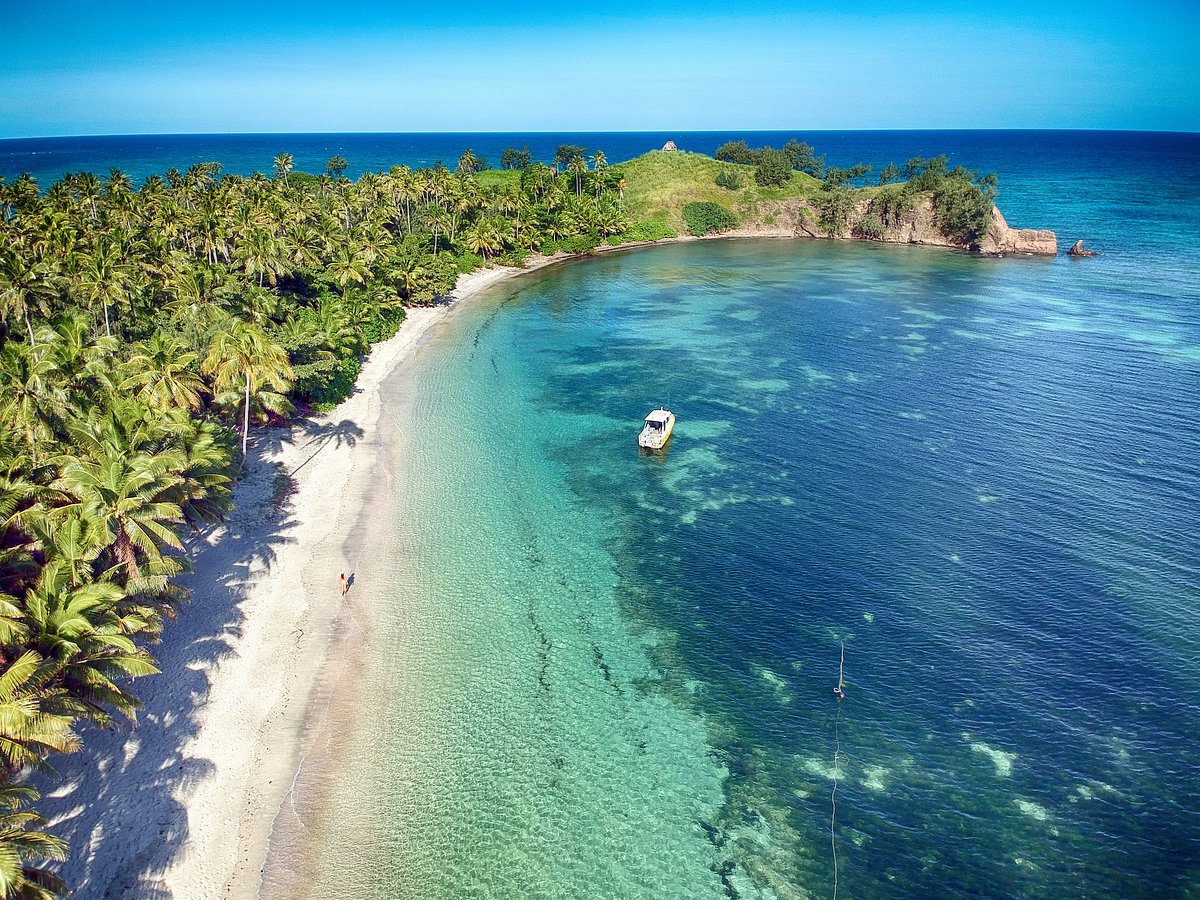
Safe Landing Eco Lodge is a small, all-inclusive eco lodge on the beach at Nacavacola, Nacula Island — one of the northern Yasawa Islands and widely regarded as among the most beautiful islands in the entire Fijian archipelago. The lodge offers beach bungalows with verandas and direct sand access, and the reef here is genuinely extraordinary — three-metre sharks, stingrays, squid, and dense coral are accessible from the shore without a boat. However, the lodge has serious operational problems in its history: no running water during the day, food poisoning among guests, cockroaches and mould, cancelled bookings with no explanation, and a bar advertised but absent in late 2025. This guide covers all of it — the reef, the location, the practical logistics, and the full picture — so you can decide whether Safe Landing is the right choice for your trip.
Nacula Island and Why Location Matters
Nacula Island sits in the northern Yasawa chain, roughly ten to twelve hours from Port Denarau in Nadi by the Yasawa Flyer ferry. It is not a casual stopover — getting there requires deliberate planning and a willingness to spend a significant portion of a day on the water. What you find when you arrive is an island that has consistently drawn praise from travellers who have worked their way through the entire Yasawa group and emerged at the northern end declaring Nacula the best of the lot.
The island’s beaches, reef systems, and village communities combine to produce something that feels less developed and more genuinely intact than the islands closer to Nadi. Nacula Island is, by most accounts from experienced Yasawa travellers, the best island in the chain.
The location of Safe Landing itself within Nacula is on the beach at Nacavacola, approximately 500 metres from Naisisili Village. This is not the same beach as the island’s most visited strip — it sits in a quieter bay, accessed by the village, with the kind of isolation that either attracts you immediately or gives you pause depending on what you are looking for in a remote Yasawa stay.
The reef accessible from this stretch of beach is the single most compelling reason guests choose Safe Landing over easier alternatives. Five consecutive weeks at the lodge in the right season provides enough time to thoroughly explore the reef — and the verdict from such extended stays is unambiguous: three-metre sharks, stingrays, squid, and coral coverage that places this site among the best snorkeling locations in the Yasawas.
The location is genuine. The question, as this guide will explain in detail, is whether the lodge’s operations match the calibre of the setting.
Getting to Safe Landing Eco Lodge
The journey to Nacula Island from the Fijian mainland is one of the longest and most involved of any Yasawa destination. There are two main routes: the Yasawa Flyer ferry, or a seaplane.
The Yasawa Flyer departs Port Denarau in Nadi each morning. Nacula Island is near the northern end of the chain, which means it is typically one of the last stops before Yasawa Island itself. Travel time is approximately ten to twelve hours depending on conditions, stops, and seasonal schedules. This is a full day on the water. The ferry can be rough when there is significant swell, particularly in the exposed sections between islands. Carry seasickness medication regardless of how well you normally travel — the Yasawa Flyer is not a sheltered coastal ferry. Check current schedules and booking arrangements directly with Awesome Adventures Fiji, as these can change seasonally.
Seaplane from Nadi dramatically shortens the journey to around thirty to forty minutes. Pacific Island Air and Northern Air Charter have operated Yasawa seaplane services. Book directly with the seaplane operator and get written confirmation — do not assume that a resort-arranged booking exists in the operator’s system without your own confirmation. This applies to all Yasawa resorts, not just Safe Landing.
Once you arrive at Nacula, a transfer from the ferry or seaplane landing point to the lodge’s beach will be arranged by the lodge’s team. Confirm this transfer arrangement when you book, including timing and cost.
One further point on cash: Safe Landing Eco Lodge operates cash only. There is no ATM on Nacula Island. The nearest ATM is on a neighbouring island, and reaching it costs approximately 20 FJD for the return boat trip. That ATM has a maximum daily withdrawal limit of 150 FJD and applies a 5% surcharge. Bring sufficient cash from Nadi or from an ATM before you board the Yasawa Flyer. Calculating how much you will need — including any extras, tips, and the cash-only all-inclusive payment itself — before you leave the mainland is essential. Running short on Nacula Island is not easily resolved.
What “Eco Lodge” Actually Means Here
Safe Landing’s “eco lodge” framing describes something specific about the type of accommodation and the philosophy of the operation, and it is worth unpacking so that expectations are calibrated correctly before arrival.
The bungalows are wooden structures with tiled floors, ceiling fans, verandas, and ensuite bathrooms with showers. This is basic, functional accommodation — not a polished boutique eco resort with premium finishes, but rather the kind of simple beach bungalow that has served as the model for budget Yasawa island stays for decades. Direct beach access from the veranda is a genuine feature and one of the property’s most appealing physical characteristics.
”Eco” in this context also implies community connection. The lodge is approximately 500 metres from Naisisili Village, and the interaction with village life is part of what guests experience here. Village visits are available, and the cultural dimension — the warmth of the local people, the walking trails through the island, and the sense of staying within a genuine Fijian community rather than at an isolated resort compound — is central to what the lodge offers.
Meals are prepared with locally grown vegetables, which reflects the lodge’s orientation toward using what the island and surrounding community produces. This is food prepared from local sources, served in a communal setting, consistent with the all-inclusive package. What it is not is a varied resort restaurant menu with multiple options at each service. You eat what the kitchen prepares. When it is good — and guests in productive stays have described the food positively — it can be a highlight. When it is inconsistent, as has occurred at other periods, there is no alternative on the property to fall back on.
The overall package is unrated, all-inclusive, cash-only, and positioned as a budget experience on one of the most genuinely beautiful islands in the Yasawa chain. The pitch is honest if you read it accurately: this is a simple place in a remarkable location, run by a local team, on an island where the beach and reef are the primary draw.
The Reef: Genuinely Exceptional
The reef at Safe Landing Eco Lodge is not a marketing claim. It is the single point on which even the lodge’s harshest critics tend to agree, and the one element of the experience that draws guests back despite documented operational difficulties.
Three-metre sharks are regularly sighted. Stingrays patrol the shallower coral zones. Squid are present. The coral coverage and diversity places this site among the top snorkeling locations not just in the Yasawas but in Fiji broadly. An extended stay of multiple weeks at the lodge is enough to confirm this verdict thoroughly — one of the best reefs in Fiji.
The access to this reef from the beach is immediate — no boat required, no transfer, no organised excursion needed. Pull on a mask and fins from the beach and you are in the water.
For guests who are primarily motivated by reef snorkeling and marine life access, Safe Landing’s location is hard to argue with. The marine life here represents the kind of encounter that guests at larger, more polished resorts in the southern Yasawas or around Denarau simply cannot replicate from their beach. If you are choosing between Safe Landing and a more comfortable property with an inferior reef, the calculus depends on what you value most about a Fiji trip.
What the lodge does not readily offer is scuba diving access. The lodge’s description does not mention a resident dive operation. Guests specifically interested in diving rather than snorkeling should confirm whether dive trips can be arranged before booking.
Activities Available on Nacula Island
Safe Landing and Nacula Island offer a range of activities that extend well beyond the reef, though the lodge’s facilitation of these varies in reliability.
Snorkeling is the headline activity and the one most consistently delivered. The reef directly off Nacavacola Beach provides immediate access to exceptional marine life with no coordination required.
Village visits to Naisisili Village are a short walk from the lodge. The village is well worth exploring and the team at the lodge are caring and genuine people. The relationship between the lodge and the village community is central to what Safe Landing offers as a cultural experience.
Hiking is available and free. The terrain on Nacula Island provides elevated viewpoints and island walks that reward guests willing to get off the beach for a few hours. Panoramic views — the chain of islands visible in both directions, the reef patterns visible below — are accessible here with relatively modest physical effort.
Hammocks provide the rest-and-drift option for guests whose version of a Yasawa holiday involves reading, watching the horizon, and doing very little with measurable purpose.
What the lodge does not reliably offer is a functioning bar. Despite being advertised, no bar has been present — with not even soft drinks available. Prospective guests should confirm current bar and beverage provisions directly with the lodge before booking, particularly if having drinks available in the evenings is part of your planned experience.
Electricity and Solar Power
One meaningful operational improvement at Safe Landing in recent years is the installation of solar panels, which now provide electricity twenty-four hours a day.
This is a significant upgrade from earlier in the lodge’s operation, when power was limited to specific hours — with a single electrical plug running power only from 6pm to 6am in some earlier periods. More recently, electricity has been available around the clock from solar panels.
Some contradictions exist about power reliability across similar periods, suggesting the solar system may have experienced reliability issues, that different bungalows may have different access to power, or that conditions have changed over time. If uninterrupted power access matters to you — for charging devices, running fans overnight, or general comfort — confirm current power availability directly with the lodge before booking.
The solar installation is genuinely positive news for a remote Yasawa property. Consistent twenty-four-hour power dramatically improves the guest experience at a basic eco lodge, where ceiling fans and device charging make a material difference to daily comfort.
Water: What You Need to Know
Water at Safe Landing Eco Lodge is supplied from a rainwater collection tank. When the system functions correctly, guests have drunk the rainwater over multi-day stays without reported issues.
However, the water situation at the lodge requires honest treatment, because serious problems have been documented.
Running water has been entirely absent during daylight hours due to plumbing problems — meaning no toilet flushing, no shower access, and no ability to wash hands during the day. Toilets not always working and water running out multiple times daily were recurring problems throughout 2025. Alongside these water failures, food poisoning incidents among guests occurred during the same period.
These are not minor inconveniences at a basic property. The absence of running water, combined with food poisoning incidents, represents a basic hygiene and guest welfare failure. Treat the most recent information available as the most current indicator of conditions.
Prospective guests should bring their own sealed drinking water if there is any uncertainty about the rainwater supply. More broadly, the water reliability situation should be a direct question to the lodge before any booking decision is made. Ask specifically: is running water available throughout the day, and what backup provisions exist when the system has problems?
How Safe Landing Compares to Oarsman’s Bay Lodge
Nacula Island has exactly two resorts: Safe Landing Eco Lodge and Oarsman’s Bay Lodge. They share the same island, the same general reef environment, and the same logistical access challenges. Oarsman’s Bay Lodge ranks number one of two resorts on Nacula Island on TripAdvisor; Safe Landing ranks second.
Oarsman’s Bay Lodge is a longer-established Yasawa property with a strong reputation across multiple decades of operation. It holds a higher TripAdvisor rating, attracts consistently positive recent feedback, and is generally considered one of the more reliable mid-range properties in the northern Yasawas. The price point is higher than Safe Landing.
Safe Landing is the budget option on Nacula Island. It is all-inclusive, cash-only, unrated, and positioned as the more accessible of the two properties from a cost perspective. The reef accessible from Safe Landing’s beach is comparable to anything accessible from Oarsman’s Bay. The question is whether the operational reliability at Safe Landing is sufficient for the experience to deliver on its promise.
If budget is the primary constraint and Nacula Island is your target destination, Safe Landing is the only affordable option. If your budget allows for Oarsman’s Bay Lodge and you are choosing between them, the current operational record for the two properties tells a fairly clear story about which delivers a more consistent guest experience. Nacula Island itself is exceptional regardless of which lodge you choose.
Who Should and Shouldn’t Stay Here
Safe Landing may suit you if:
You are a budget traveller who is genuinely comfortable with basic, sometimes unreliable infrastructure in a remote island setting. You are primarily motivated by access to an extraordinary reef and a beautiful beach, and you can find genuine satisfaction in that alone even if other aspects of the stay fall short. You have experience travelling in remote Pacific Island locations and know how to manage the practical challenges that come with limited infrastructure. You are flexible about food, water, and comfort in a way that reflects real lived experience rather than theoretical tolerance. You are interested in an authentic village-connected experience on one of the Yasawas’ most beautiful islands.
Safe Landing may not suit you if:
You have travelled to a remote Yasawa island before and found operational difficulties genuinely stressful rather than part of the adventure. Reliable running water is not a luxury expectation but a basic requirement for your stay. You have any food safety concerns that would make a food poisoning risk unacceptable. You booked this trip with limited annual leave or a trip that cannot be easily rescheduled — the booking cancellation history at Safe Landing means the risk of arriving to find your reservation cancelled is not theoretical. You need a bar or reliable beverages as part of your holiday experience. You are travelling with children or family members who require consistent comfort and hygiene standards.
Questions to Ask Before You Book
Given the documented concerns in Safe Landing’s operational history, there are specific questions that any prospective guest should put directly to the lodge before making a booking commitment.
Water supply: Is running water available throughout the day in all bungalows? What is the contingency when there are plumbing problems? Has the water system been repaired or upgraded since late 2025?
Food and hygiene: What food safety practices are in place in the kitchen? Have there been any recent guest food safety incidents?
Bar and beverages: Is the bar currently operating? What non-alcoholic beverages are available? Is this included in the all-inclusive rate or charged separately?
Power: Are all bungalows served by the solar power system, and is twenty-four-hour power reliable?
Booking confirmation: Can the lodge provide written confirmation of your booking? What is the cancellation and rescheduling policy if the lodge needs to cancel?
Cash and payment: What is the exact all-inclusive rate for your dates? What extras are charged outside the all-inclusive package?
Getting clear answers to these questions in writing before you commit gives you both the information you need and a documented record of what was promised if things differ on arrival.
Practical Information
Location: Nacavacola Beach, approximately 500 metres from Naisisili Village, Nacula Island, Yasawa Islands, Fiji.
Phone: +679 932 2758
Style: All-inclusive eco lodge. Unrated. Budget.
Accommodation: Beach bungalows with veranda and direct beach access. Wooden furnishings, tiled floors, ceiling fans, ensuite bathroom with shower.
Meals: Included in the all-inclusive rate. Prepared with locally grown vegetables. Served communally.
Amenities: Ocean view, beach access, restaurant. WiFi is noted as available but paid for separately — confirm current WiFi arrangements directly. Bar: advertised but found to be absent. Confirm before booking.
Power: Solar panels now installed. Twenty-four-hour power claimed; confirm reliability with the lodge for current status.
Water: Rainwater collection tank. Running water during daytime has been reported as unreliable. Bring sealed drinking water from the mainland if you have concerns.
Payment: Cash only. No ATM on Nacula Island. Nearest ATM on a neighbouring island: approximately 20 FJD return boat trip, 150 FJD maximum daily withdrawal, 5% surcharge. Bring sufficient cash from Nadi before boarding the ferry.
Rates: Not published. Request current pricing directly from the lodge by phone before booking.
Getting there: Yasawa Flyer ferry from Port Denarau, Nadi — approximately ten to twelve hours to Nacula Island. Seaplane from Nadi — approximately thirty to forty minutes. Confirm transfer from ferry or seaplane landing to the lodge when booking.
Frequently Asked Questions
How do you get to Safe Landing Eco Lodge on Nacula Island?
The Yasawa Flyer ferry departs Port Denarau in Nadi each morning and takes approximately ten to twelve hours to reach Nacula Island, which sits near the northern end of the Yasawa chain. A seaplane from Nadi takes approximately thirty to forty minutes. Nacula is one of the more remote destinations in the Yasawas, and travel should be planned accordingly — particularly for the ferry, which is a full day on the water and can be rough in open stretches. Check current schedules and booking arrangements directly with Awesome Adventures Fiji for the ferry, and with Pacific Island Air or Northern Air Charter for seaplane services.
Is Safe Landing Eco Lodge truly all-inclusive?
Yes. The rate covers accommodation and three daily meals. Meals are prepared with locally grown vegetables and served communally. Note that the bar, which is listed among the lodge’s amenities, has been found to be non-existent — confirm current beverage availability with the lodge before booking. WiFi is listed as available but charged separately. Bring cash for any extras, as the lodge operates cash only.
What is the snorkeling like at Safe Landing?
It is genuinely exceptional, and it is the most consistent positive across the lodge’s entire operational history. The reef off Nacavacola Beach hosts three-metre sharks, stingrays, squid, and diverse coral. Extended stays of multiple weeks confirm the reef as among the best in the Yasawas. Access is directly from the beach without requiring a boat or organised excursion. This is the property’s strongest and most reliable draw.
Is running water reliable at Safe Landing Eco Lodge?
The answer, based on conditions in 2025, is no. Running water has been entirely absent during daylight hours due to plumbing problems — meaning no toilet flushing, no showering, and no handwashing during the day. Water has also run out multiple times daily. Ask the lodge directly about current water supply reliability before you book, and bring sealed drinking water from the mainland if you have any concern.
Is Safe Landing Eco Lodge cash only?
Yes. The lodge does not accept cards. The nearest ATM is on a neighbouring island and requires approximately 20 FJD for a return boat trip to access, with a maximum daily withdrawal of 150 FJD and a 5% surcharge applied. Calculate your total cash requirement — including the all-inclusive rate, any extras, tips, and a buffer for emergencies — and withdraw from an ATM in Nadi or at Port Denarau before boarding the Yasawa Flyer.
How does Safe Landing Eco Lodge compare to Oarsman’s Bay Lodge?
They are the only two resorts on Nacula Island. Oarsman’s Bay Lodge is ranked number one of the two and holds a stronger and more consistent operational record. It is a higher price point. Safe Landing is the budget option on the island and delivers a more variable experience. Both properties share access to the same island and broadly the same reef environment. If budget determines your choice and Nacula Island is your destination, Safe Landing is the affordable option. If your budget allows for Oarsman’s Bay Lodge, its current record suggests it delivers a more reliable stay.
Is Safe Landing Eco Lodge suitable for families with children?
The lodge lists “Family” and “Family Resort” among its style categories. However, the documented operational issues — including reports of no running water during the day, food poisoning among guests, cockroaches, and a booking cancellation with no alternative offered — represent real risk factors for families travelling with children, particularly where hygiene reliability and booking certainty are important. Families should ask detailed questions about current water and food safety conditions before booking, and should seriously consider Oarsman’s Bay Lodge as an alternative if a more reliable operational standard is required.
What should I ask before booking Safe Landing Eco Lodge?
Ask the lodge directly: Is running water available throughout the day in all bungalows, and what happens when there are plumbing problems? Is the bar currently operating, and what non-alcoholic beverages are included? Are all bungalows on the solar power system with reliable twenty-four-hour electricity? Can you provide written confirmation of the booking? What is the all-inclusive rate for my dates, and what extras are not included? Have there been any recent food safety incidents among guests? Getting clear answers in writing before committing gives you both the information needed and a record of what was promised.
By: Sarika Nand